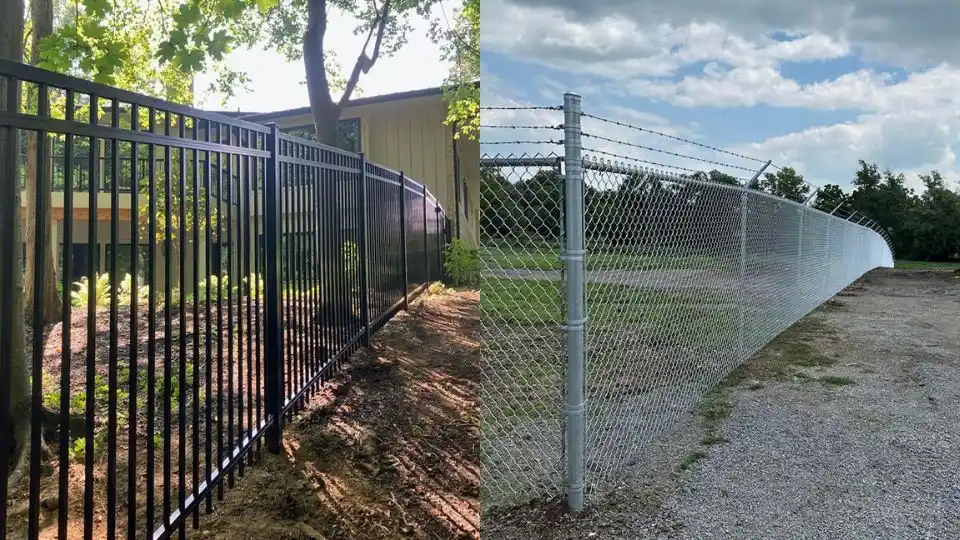
When security is the top priority, a fence becomes more than just a boundary, it serves as your property’s first line of physical defense, a privacy shield, and a strong psychological deterrent against trespassers.
The best security fence depends on your specific needs. Homeowners usually focus on privacy for family and children, while commercial properties require anti-climb features, equipment protection, access control, and integration with security systems like cameras and gates. There is no one-size-fits-all solution, but matching the right material, height, design, and gate system to your risk level makes all the difference.
A truly effective security fence must do three things well: create a clear visual barrier that signals restricted access, make climbing or cutting extremely difficult, and secure every entry point, including gates and service areas. Even the strongest fence panels can fail if the gate hardware is weak.
Security Fence Comparison: At a Glance
|
Material |
Security Level | Privacy | Maintenance | Best For |
|
Wood |
Medium | High | High | Residential privacy & backyard safety. |
|
Vinyl |
Medium | High | Low | Low-maintenance residential security. |
| Chain Link | Medium-High | Low (unless slatted) | Low |
Industrial yards & budget perimeter control. |
| Ornamental Steel | Very High | Low | Low |
High-end estates & commercial storefronts. |
| Welded Wire | Very High | Medium | Low |
Data centers & anti-climb zones. |
What’s the Best Fence for High Security and Privacy?
For properties needing both strong security and full privacy, a 6- to 8-foot solid privacy fence with reinforced posts and a reliable lockable gate system is usually the smartest choice.
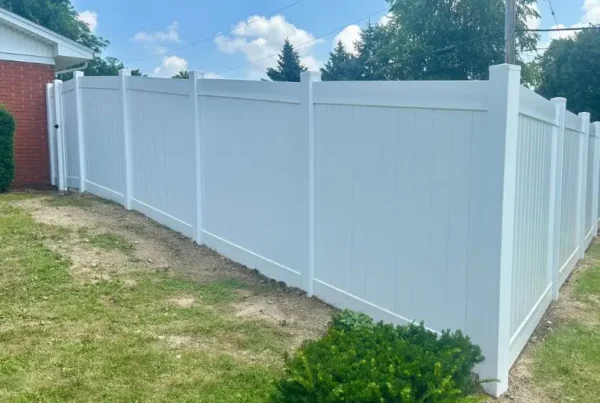
Homeowners often find excellent results with board-on-board wood, vinyl privacy panels, or composite fencing. These styles eliminate gaps, block visibility, and reduce climbable footholds. Vinyl and composite options stand out for their durability and low maintenance, making them ideal for long-term residential use.
For higher-risk homes or commercial setups requiring both privacy and strength, steel-framed privacy panels or aluminum systems with privacy inserts deliver a modern look and superior protection. Scheiderer Fence specializes in these custom solutions, helping clients select designs that balance aesthetics with robust perimeter security.
Best Residential Fence for Security
For most homes, the best residential fence for security balances privacy, strength, curb appeal, and family safety.
Wood privacy fencing remains popular because it provides complete visual blockage and can be built in custom heights. Cedar is a top choice due to its natural resistance to insects and moisture. Board-on-board or stockade styles create a solid barrier that is difficult to breach.
Many homeowners prefer vinyl privacy fencing for its low maintenance. It resists rot, warping, and pests while offering tight interlocking panels that enhance both privacy and security. For front yards where elegance matters, ornamental aluminum or steel fencing with spear-top pickets offers good deterrence while maintaining an attractive appearance.
Gate safety is critical especially for homes with children, pets, or pools. A strong fence paired with weak latch hardware defeats the purpose of the entire system.
Best Commercial Fence for Security
Commercial properties face higher risks, often protecting vehicles, tools, inventory, and restricted zones. This demands a different approach focused on durability and large-scale perimeter control.
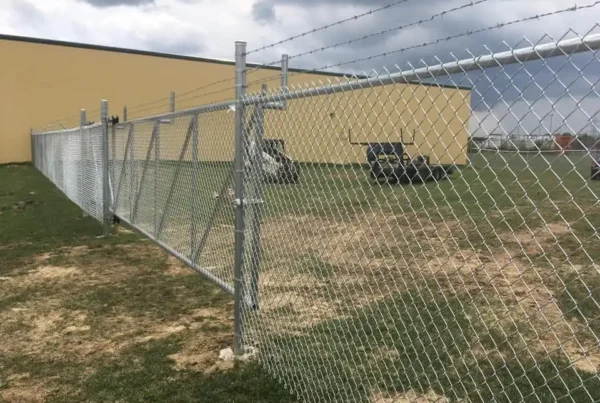
Heavy-gauge chain link fencing with privacy slats, increased height, and barbed or anti-climb tops remains one of the most cost-effective options for warehouses, construction sites, schools, and industrial yards.
For premium commercial spaces, ornamental steel fencing provides a professional appearance along with serious security. It works particularly well for office complexes, medical facilities, and gated business parks. Where full privacy is essential such as around data centers or storage compounds solid metal panel systems perform best.
Scheiderer Fence has extensive experience designing and installing these upgraded commercial systems, ensuring they integrate smoothly with automatic gates, keypads, cameras, and motion lighting for complete perimeter protection.
Which Fence Material Is Hardest to Break Into?
When maximum intrusion resistance is needed, heavy-gauge steel fencing is generally the toughest to breach. Welded steel panels resist impact, bending, and cutting far better than wood or vinyl. While wood and vinyl offer good privacy, and chain link is durable when upgraded, steel provides superior long-term strength when installed with deep concrete footings and reinforced hardware.
Maintenance & Long-Term Ownership
A security fence is only effective if it remains structurally sound. When choosing, consider the “true cost” of ownership:
- Wood (High Maintenance): Requires staining or sealing every 2–3 years. Without this, wood can rot or warp, creating gaps that compromise privacy and security.
- Steel/Aluminum (Set & Forget): Usually powder-coated to prevent rust. Aside from occasional cleaning, these fences maintain their structural integrity for decades.
- Vinyl (Low Maintenance): Can become brittle in extreme cold or fade in intense UV light, but generally only requires a power wash to stay looking new.
How Tall Should a Security Fence Be?
Height plays a major role in both privacy and deterrence:
- Residential: 6 feet is the minimum for meaningful privacy; 8 feet is significantly more effective against climbing.
- Commercial: 8 to 12 feet is common, depending on zoning and asset value.
Design matters as much as height. Avoid placing horizontal rails on the outside, and keep ground clearance minimal to prevent easy access underneath.
Climate & Environmental Considerations
Local conditions can dictate which security features are actually viable for your property.
1. High-Wind Areas
If you live in a wind-prone region, a solid 8-foot privacy fence acts like a giant sail. This can lead to leaning or snapped posts. In these areas, ornamental steel or chain link is superior because it allows wind to pass through, or you must invest in deeper, reinforced concrete footings for solid panels.
2. Coastal Environments
Salt air is the enemy of standard metal. For coastal properties, aluminum fencing is the gold standard because it does not rust. If using steel, it must be hot-dip galvanized and powder-coated to prevent “spider webbing” rust.
3. Soil & Ground Stability
In areas with heavy clay or high frost lines, posts can “heave” out of the ground. Scheiderer Fence recommends using gravel bases under concrete footings to allow for drainage, ensuring your security gate remains perfectly aligned and lockable year-round.
Security Fence Features That Actually Matter
The most secure fences go beyond basic material choices. Key upgrades include:
- Deep concrete-set posts to prevent push-over
- Anti-climb designs with no external footholds
- Strong, self-closing gate systems with high-quality locks
- Privacy inserts or solid panels where visibility must be blocked
- Integration with cameras, motion lights, and access control
Professional installation ensures these features work together as a complete security system.
Frequently Asked Questions (FAQs)
- How much does a good security fence cost?
Security fence costs usually range from $25 to $60 per foot for residential privacy fences and $30 to $100+ per foot for upgraded commercial systems. The final price depends on material, height, and extra features like gates and anti-climb tops.
- Do I need a permit for a security fence?
Yes, most cities require a permit for fences over 6 feet tall or for any commercial installation. Check your local zoning rules for height limits and property line setbacks before you start.
- Can I upgrade my current fence instead of replacing it?
Yes. You can improve security by adding taller extensions, anti-climb toppers, stronger gate locks, or privacy slats. These upgrades are often cheaper than a full replacement.
- How long does a security fence last?
Vinyl and aluminum fences can last 20–30 years with little maintenance. Wood lasts 15–25 years if properly cared for. Steel and chain link are very durable but may need rust protection in tough weather.
- Which security fence offers the best balance of strength and privacy?
For homes, vinyl or composite privacy fencing with steel posts gives the best mix of security and privacy. For commercial spaces, welded steel panels offer stronger protection.
Final Verdict: Best Fence for Security and Privacy
The best security fence is one that fits your property’s risk level, privacy needs, and long-term goals. Whether you need a reinforced privacy fence for your home or a heavy-duty commercial perimeter system, Scheiderer Fence can help design the right solution for lasting protection. Contact us today to discuss the best security fence for your property.