Your dog got out again, and now you’re trying to find the best fence for dogs that dig or jump without wasting money on the wrong fix. The right solution depends entirely on how your dog escapes. A digger needs a below-grade barrier, while a jumper needs more height, fewer footholds, and often a solid panel that blocks visual triggers. This guide breaks down exactly what works for each behavior so you can choose the right fence the first time.
Best Fence Setup for Dogs That Dig or Jump
The best fence for dogs that dig or jump is usually a 6-foot solid privacy fence with interior-facing rails, a buried L-footer, and no gaps at the base.
- For diggers: add a buried wire footer or concrete base
- For jumpers: use solid 6–8 ft panels with no exterior footholds
- For dogs that do both: combine height + buried barrier + lean-in topper
How to Choose the Best Fence for Dogs That Dig or Jump
Before picking a fence, identify the behavior:
- Digger: works at the base of the fence, usually at corners or soft soil spots
- Jumper: launches over the top, typically triggered by something they see or hear
- Climber: grips the fence face and scales it, most common with chain link
- Combination: some dogs do more than one
The escape style determines the solution. A taller fence doesn’t stop a digger. A buried footer doesn’t stop a jumper. Getting this right the first time saves you from doing the job twice.
Best Fence for Dogs That Dig
What Actually Stops a Digger
Digging starts at the base of the fence. Dogs smell something on the other side, find soft ground, and go. The only reliable fix is a below-grade barrier, something that stops them within the first few inches of excavation.
Buried L-Footer, Best Option
A strip of galvanized welded wire or hardware cloth bent into an L-shape. The vertical portion attaches to the fence posts. The horizontal portion, 12 to 18 inches wide, extends outward into the yard, buried 4 to 6 inches below grade and covered with soil or gravel.
When the dog starts digging, they hit the wire almost immediately. After a few attempts with the same result, most stop trying entirely. This works with any fence type and can be retrofitted to an existing fence without replacing anything.
Concrete Footer
A narrow concrete footing poured along the base during installation is the most permanent solution. It eliminates digging entirely. Best done at the time of installation, retrofitting is possible but labor-intensive.
Paver or Gravel Border
A 12 to 18 inch border of river rock, crushed gravel, or flat pavers along the interior fence line removes the soft soil a dog needs to start digging. Handles moderate diggers well and looks clean in the yard. Not as reliable as a buried footer for serious escape artists.
Hardware Cloth Laid Flat
Galvanized hardware cloth pinned flat to the ground inside the fence line with landscape staples, then covered with mulch or grass seed. A dog digging down hits the wire within inches and stops. Budget-friendly, and it disappears visually within a season.
Which Method Should You Use?
|
Situation |
Best Method |
|
New fence installation |
Concrete footer or L-footer built in |
|
Existing fence, moderate digger |
Buried L-footer or gravel border |
| Existing fence, serious escape artist |
L-footer plus paver border |
| Temporary or rental property |
Hardware cloth laid flat |
What Fence Setup Actually Stops Jumping Dogs
Height matters, but it’s not the only variable. Three things working together make a fence effective against jumpers:
- Sufficient height: based on your dog’s demonstrated capability, not breed averages
- No exterior footholds: horizontal rails on the outside give a dog something to push off from
- Reduced visual trigger: a solid fence blocks the view of whatever is motivating the jump
A dog that can see what they want on the other side will keep trying regardless of fence height. Removing the visual trigger often matters as much as adding height.
Recommended Heights by Dog Size
|
Dog Size |
Minimum Height |
|
Small breeds (under 25 lbs) |
4 feet |
|
Medium breeds (25–60 lbs) |
5 feet |
| Large, athletic breeds (60+ lbs) |
6 feet |
| High-drive working breeds |
6–8 feet |
If your dog has already cleared a specific height, plan for at least one foot above that.
Best Fence Types for Jumpers
Solid Privacy Fence 6 Foot Minimum
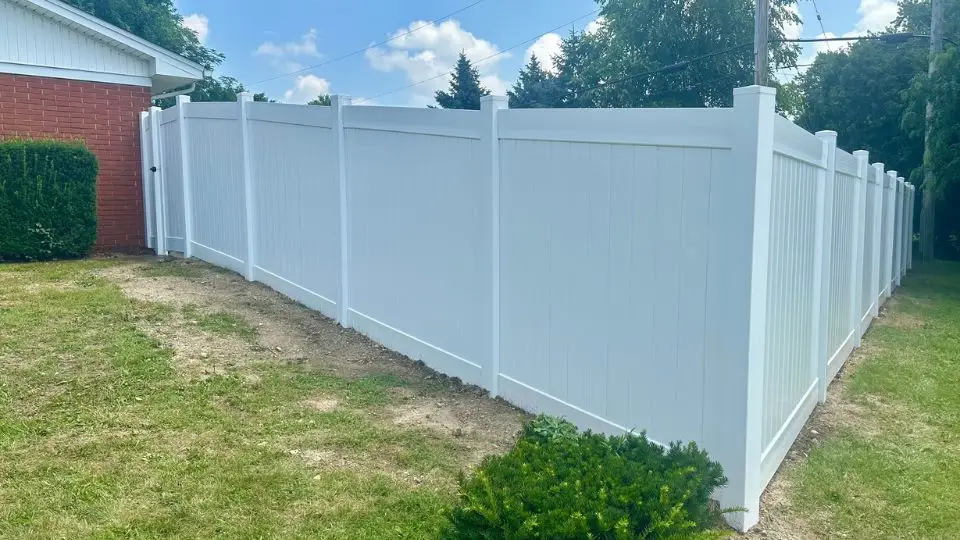
A solid wood or vinyl privacy fence with interior-facing rails is the strongest starting point, especially when it’s part of a professionally installed residential fence designed for dogs. The smooth exterior face gives the dog nothing to push off from. The solid panels eliminate the visual trigger that causes the jump in the first place.
Rails facing outward, common in many standard privacy fence designs, act as a step ladder. If that’s your current setup, it’s worth correcting before adding height.
Lean-In Extensions
An inward-angled extension mounted along the top of an existing fence creates an overhang that sends a jumping dog back into the yard. Works on any fence type, practical when the fence is already a reasonable height, but the dog is still clearing it.
Coyote Rollers
A spinning cylinder is mounted along the top rail. When a dog grabs the top to pull themselves over, the roller spins, and they lose their grip. Most effective for dogs that grip the top rail rather than purely vaulting. Compatible with wood, vinyl, and chain link.
If Your Dog Also Climbs: Best Fence Upgrade
Jumpers and Climbers Are Not the Same Problem
A jumper launches. A climber grips, reaches, and pulls themselves up methodically. The fix is completely different, which is why most generic fence advice fails climbers entirely.
Climbing is most common in German Shepherds, Belgian Malinois, Huskies, and terrier breeds. Once a dog climbs out successfully, they will try again every time.
What Stops a Climber
Smooth Solid Panel Fence No Exterior Rails
Without a grip surface, a climber cannot get started. A 6-foot solid wood or vinyl fence with all rails facing inward gives the dog a flat, featureless exterior, nothing to grab onto. This single design choice stops the majority of climbers before they get off the ground.
Inward-Angled Topper
For dogs that reach the top rail, a lean-in extension angled 45 degrees inward acts as a ceiling. The dog reaches the overhang and has nowhere to go. Gravity sends them back into the yard.
Coyote Rollers
The spinning cylinder removes grip at the top rail, the same application as with jumpers, but especially effective for climbers who make it most of the way up and grip the top to pull over.
Why Chain Link Fails Climbers Completely
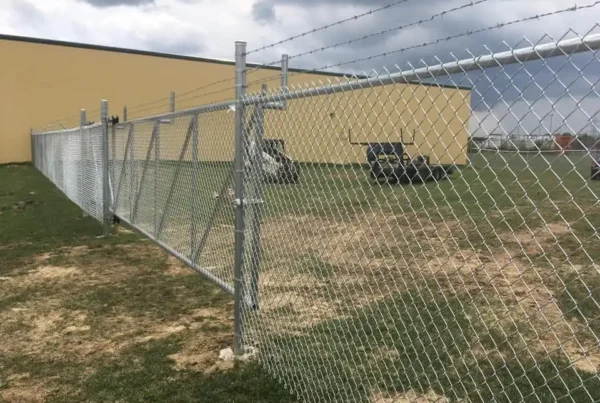
Chain link’s diamond mesh is a built-in ladder. An experienced climbing dog scales a 6-foot chain link fence in seconds. If you already have a chain-link fence and a confirmed climber, the options are: add solid panel liners on the interior side, install a full lean-in overhang system at the top, or replace the fence with a smooth, solid-panel design.
Fence Materials Compared
|
Material |
Stops Diggers | Stops Jumpers | Stops Climbers | Maintenance | Cost |
|
Solid Wood |
Good (with footer) | Good at 6 ft | Good (interior rails) | Moderate | Moderate |
|
Vinyl |
Good (flush grade) | Good at 6 ft | Good (smooth surface) | Low | Moderate–High |
| Chain Link | Fair (with apron) | Fair | Poor | Low |
Lower |
| Welded Wire | Good (with apron) | Good (tall) | Fair (small mesh) | Low |
Low–Moderate |
| Composite | Good (flush grade) | Good at 6 ft | Good (smooth surface) | Very Low |
Higher |
Installation Details That Keep Dogs From Escaping
At Scheiderer Fence, we usually see escape issues happen because of base gaps, shallow posts, or gate weak points rather than the fence panel itself.
Bottom Rail Placement
The bottom rail should sit flush with or very close to grade. A gap of even 2 to 3 inches is enough for a motivated digger to get started. On uneven terrain, a good installer accounts for grade changes rather than leaving gaps at low points.
Post Depth and Concrete Setting
Posts set to the correct depth and secured in concrete keep the fence rigid over time. A fence that loosens develops gaps. In Ohio, post depth also needs to account for the frost line, as clay-heavy soil expands and contracts significantly through the freeze-thaw cycle, and posts set too shallow will heave and shift, creating vulnerabilities at the base over time.
Gate Hardware
More dog escapes happen through gates than anywhere else in the fence, left open accidentally or pushed open because the latch wasn’t holding. Self-closing hinges and a gravity- or keyed-latch are worth the upgrade for any pet enclosure. Treat the gate as the weakest point and spec it accordingly.
Frequently Asked Questions
How do you stop a dog from digging under a fence without replacing it?
A buried L-footer, galvanized wire bent into an L-shape and buried 4 to 6 inches below grade along the fence base, is the most reliable retrofit. Flat hardware cloth pinned to the ground inside the fence line is a lower-cost alternative that works well for moderate diggers.
What is the best fence for large dogs that jump?
The best option is a 6-foot solid privacy fence with interior-facing rails, no footholds, and blocked visibility. For proven escape artists, add lean-in extensions or coyote rollers at the top.
What is the best fence for dogs that climb?
A smooth, solid panel fence with no exterior horizontal rails. Avoid chain link entirely for confirmed climbers. Add an inward-angled topper and coyote rollers at the top for the most complete solution.
Does fence height alone solve the jumping problem?
Not always. A dog that can see what they want on the other side will keep trying regardless of height. Switching to a solid fence that removes the visual trigger often stops jumping more effectively than simply going taller.
What is the minimum fence height for an athletic dog?
For large, high-drive breeds, Huskies, Malinois, and German Shepherds, 6 feet is the starting point. If the dog has already cleared that, go to 8 feet or add lean-in extensions.
How much does a dog-proof fence installation cost in Ohio?
Dog-proof fence installation costs vary based on the fence material, yard size, fence height, and dog-specific safety features such as dig guards, buried mesh, and secure gate hardware.
The Bottom Line
- For dogs that dig, the best fence upgrade is a below-grade barrier like a buried L-footer, which can be added to almost any existing fence.
- Jumpers need height, solid panels, no exterior footholds, and reduced line of sight. Lean-in extensions and coyote rollers handle the dogs that push past the basics
- Climbers need a smooth, gripless fence face with an inward-angled topper; chain link is not a viable option for this behavior.
Many dogs use both digging and jumping to escape. In most cases, the best fence for dogs that dig or jump is a well-built 6-foot solid privacy fence with interior rails, a buried wire footer, no ground gaps, and a lean-in topper for extra containment.
If you’re in Ohio and want a containment setup built around your specific dog and yard, the residential fencing team at Scheiderer Fence works directly with pet owners on exactly this. You can also contact us for a site-specific recommendation.