If you’ve ever watched a fence go from solid to shaky in just a few winters, you already know Ohio isn’t easy on outdoor structures. One season it’s 90 degrees and humid; the next it’s below freezing with snow on the ground. That back-and-forth is exactly why fence lifespan in Ohio depends on more than the material you pick; it depends on how well that material and the installation behind it can handle what the sky throws at it all year long.
At Scheiderer Fencing, we’ve installed and repaired fences across Central Ohio long enough to see which weather patterns cause the most damage. Here’s what actually happens to your fence through an Ohio year and how to keep it standing strong for decades.
Why Ohio’s Climate Is Hard on Fences
Ohio’s humid continental climate brings heavy spring rain, sticky summer humidity, and winters that swing between snow, ice, and thaw, sometimes in the same week. That constant swing is harder on a fence than any single extreme. Materials expand, contract, absorb moisture, and get pushed around by shifting soil, all within one year. A fence built without that in mind shows wear far faster than one installed with Ohio’s climate in mind from day one.
How Do Rain and Humidity Affect Fence Lifespan?
Rain is the quiet destroyer of fences. Wood soaks up moisture through its grain, leading to swelling, warping, and eventually rot if it never fully dries out between storms. Humidity makes it worse, keeping moisture against the surface and inviting mold, mildew, and insects near posts where water pools after a downpour. Understanding how different materials perform in wet conditions can help you choose the best fence for your home, especially if you live in an area that experiences frequent rain and high humidity.
Metal fencing isn’t immune either. Untreated steel rusts under repeated wet-dry cycles, and even aluminum can suffer at connection points if drainage around the posts isn’t handled properly.
The Impact of Freeze-Thaw Cycles on Fence Posts
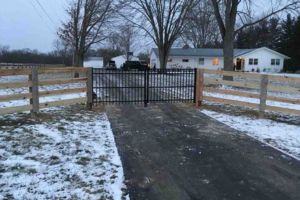
This is the one most homeowners don’t expect. Ohio soil freezes and thaws repeatedly through winter, and each time it does, the ground expands and contracts. If a fence post isn’t set below the frost line, which typically falls between 32 and 36 inches in much of Ohio, that movement pushes the post upward a little each winter. This is called frost heave, and it’s a leading reason fences start leaning, wobbling, or pulling out of alignment within just a few years.
Proper post depth and concrete footing aren’t optional extras in Ohio; they’re the biggest factor separating a fence that lasts 25 years from one that needs repair by year three.
How Sun and UV Exposure Shorten Fence Life
Ohio summers bring plenty of direct sun, and UV rays break down materials from the outside in. Wood fibers dry out and turn brittle, paint fades and cracks, and even vinyl can gradually lose color after years of exposure. South- and west-facing sections typically show sun damage first, since they get the most direct afternoon light.
UV-resistant stains for wood, and vinyl or aluminum with built-in UV inhibitors, go a long way toward slowing this kind of fading and brittleness.
Wind, Snow, and Storm Damage: What to Watch For
High winds put lateral pressure on a fence line, and that stress concentrates at the posts and connection points. Ohio’s spring and summer storms bring gusts strong enough to loosen panels, crack boards, or knock down sections that weren’t anchored deep enough. Winter adds another layer: heavy, wet snow against fence lines and gates adds weight that can bend lighter materials or strain hinges over a season.
Which Fence Material Handles Ohio Weather Best?
There’s no single “best” material for every yard, but some hold up better against Ohio’s freeze-thaw cycles, humidity, and sun than others:
- Aluminum resists rust, moisture, and UV fading, making it one of the lowest-maintenance options long-term.
- Vinyl doesn’t rot or absorb water and holds color well with UV protection, though low-quality vinyl can turn brittle in extreme cold.
- Pressure-treated wood and cedar offer a classic look but need resealing every two to three years.
- Chain link and steel are practical, budget-friendly, and handle wind and snow well when the coating resists rust.
Choosing the right material for your yard and budget makes a real difference in how many years you get before repairs or replacement come into play.
Choosing the right material for your yard and budget makes a real difference in how many years you get before repairs or replacement come into play. If you’re comparing options, read our guide on the best fence material for the Midwest climate to learn how different fencing materials perform in Ohio’s weather conditions.
How to Extend Your Fence’s Lifespan Through Every Season
A few habits go a long way no matter the material:
- Reseal or restain wood fences every two to three years.
- Check post bases each spring for shifting after freeze-thaw cycles.
- Trim plants touching the fence line to reduce trapped moisture.
- Clear heavy snow off gates and panels after storms.
- Inspect hardware and fasteners for rust once a year.
Regular attention catches small problems, a loose post, a fading stain, a hairline crack, before Ohio’s weather turns them into full repairs.
Frequently Asked Questions
How long does a fence typically last in Ohio?
It depends on material and installation quality. As a general range, wood fences last 15 to 20 years with regular maintenance, vinyl lasts 20 to 30 years, and aluminum can last 25 to 40 years or more. Proper post depth below the frost line pushes any material toward the higher end of that range.
What type of fence holds up best in extreme weather?
Aluminum and quality vinyl generally perform best against Ohio’s freeze-thaw cycles, humidity, and UV exposure, since neither rots, rusts, nor absorbs moisture the way wood can. Chain-link is also a strong, budget-friendly option for wind and snow resistance.
Can I protect my fence from weather damage without replacing it?
Yes. Resealing wood every couple of years, checking posts for movement each spring, keeping the fence line clear of overgrowth, and addressing rust or loose hardware early can add years to a fence’s life regardless of material.
Ready for a fence built to handle Ohio’s weather? Contact Scheiderer Fencing for a free estimate, or explore our residential and agricultural fencing options.