Choosing the right way to keep your dog safely within your yard often comes down to two options: an invisible fence or a regular fence. While both can help define where your dog can roam, they work in very different ways.
An invisible fence uses an electronic boundary and requires pet training, while a regular fence creates a physical barrier around your property. Finding the right residential fencing solutions depends on your yard, your dog’s behavior, your privacy needs, and whether you want a physical boundary.
What Is an Invisible Fence?
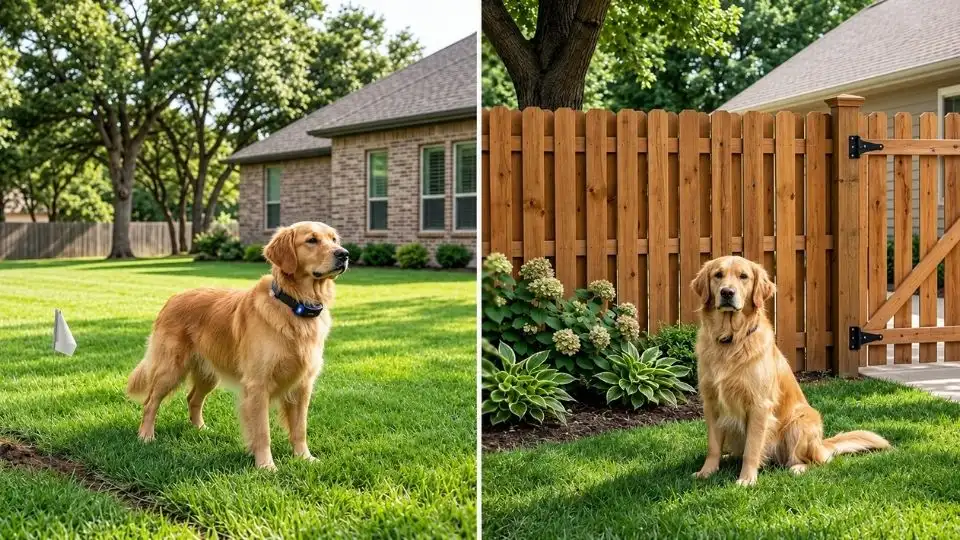
An invisible fence is a pet containment system that creates a designated boundary without installing a visible fence around the yard. Depending on the system, a buried wire or other technology establishes the boundary, while your dog wears a compatible receiver collar.
When your dog approaches the designated boundary, the system provides an alert. Proper training helps your dog learn where the boundary is and how to stay within the permitted area.
An invisible dog fence can be useful when you want to preserve an open view or avoid placing a physical fence across certain areas of your property. However, it is primarily designed for pet containment rather than privacy or physical property security.
What Is a Regular Fence?
A regular fence creates a physical boundary around part or all of your property. Unlike an electronic containment system, traditional fencing physically separates the enclosed area from the surrounding space.
A regular fence provides a physical barrier around your yard. Ensuring your enclosure meets USDA animal containment and perimeter fence standards helps prevent pets from escaping and keeps outside animals away.
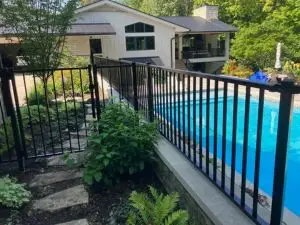
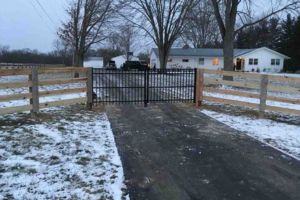
Depending on your needs, regular fencing can be built from materials such as wood, vinyl, chain link, or aluminum. Fence style, height, gate placement, and construction can all be selected according to the property and its intended use.
Invisible Fence vs. Regular Fence: Key Differences
The biggest difference between an invisible fence and a regular fence is the type of boundary each creates. An invisible fence establishes an electronic boundary, while a regular fence provides a physical barrier.
| Feature | Invisible Fence | Regular Fence |
| Boundary type | Electronic | Physical |
| Visible from the yard | Generally no | Yes |
| Requires pet training | Yes | Usually less dependent on training |
| Provides privacy | No | Some styles can |
| Creates a physical barrier | No | Yes |
| Helps define the property | Electronically | Physically |
| Can affect views | Minimal | Depends on fence style |
| Keeps outside animals out | No physical barrier | Yes, depending on design |
| Can add property security | Limited | Yes |
| Design options | Limited physical appearance | Many material and style options |
Neither option is automatically right for every property. The important question is what you need the fence to accomplish.
Invisible Dog Fence vs. Regular Fence for Pet Safety
Pet safety is an important consideration when comparing fencing options. The way each system contains a dog is fundamentally different.
How Invisible Fences Keep Dogs Within a Boundary
An invisible fence relies on an electronic boundary rather than a physical obstruction. Because your dog must learn to recognize and respect that boundary, training is an important part of using the system effectively.
A dog’s temperament, age, behavior, and response to training can all influence whether an invisible fence is a suitable containment option.
It is also important to understand that an invisible fence does not physically prevent another animal, person, or other outside distraction from entering the yard.
How Physical Fences Contain Dogs
A regular fence provides a physical barrier between your dog and the area outside the enclosure. This can make it easier to create a clearly defined space where your dog can play or spend time outdoors.
The fence’s height, material, construction, gates, and overall design should be appropriate for the dog and property. If you have an active pet, choosing the best fence for dogs that dig or jump can help address these specific behavioral challenges.
Which Fence Works Better for Different Properties?
The best fencing solution can vary significantly from one property to another. Your yard layout and how you use the outdoor space should be part of the decision.
For Open Yards and Unobstructed Views
An invisible fence may be appealing when maintaining an open appearance is a priority. Because there is no prominent physical fence surrounding the yard, it can preserve sightlines and the visual openness of the property.
This can be particularly useful when you want to establish a pet boundary without changing the appearance of the landscape with a visible fence.
For Privacy and a Clearly Defined Yard
A regular fence is generally the more appropriate choice when you want a clearly enclosed outdoor space or additional privacy.
Fence materials and styles can be selected to create different levels of visibility. A solid fence, for example, can separate your outdoor living area from neighboring properties while also establishing a physical property boundary.
For Properties With Dogs That Try to Escape
If your dog frequently attempts to leave the yard, consider how your dog responds to boundaries and physical barriers.
An invisible fence depends on training and your dog’s willingness to respect the electronic boundary. A regular fence provides a physical obstacle, although its design still needs to account for behaviors such as jumping, digging, or climbing.
For Properties With Multiple Uses
If your yard is used for pets, children, entertaining, gardening, or outdoor recreation, a regular fence may provide additional benefits beyond pet containment.
A physical fence can help divide outdoor areas and create a more controlled environment. An invisible fence may be more suitable when the primary goal is simply establishing a pet boundary while keeping the yard visually open.
Pros and Cons of Invisible Fencing
Invisible fencing can solve specific pet-containment challenges, but it is not a replacement for every function of a physical fence.
Benefits of Invisible Fencing
- Preserves the open appearance of your property
- Does not create a prominent physical barrier
- Can establish a designated pet boundary
- May work well where maintaining views is important
- Can accommodate certain property layouts where traditional fencing may be difficult
Limitations of Invisible Fencing
- Requires consistent pet training
- Does not physically prevent a dog from crossing the boundary
- Does not prevent people or other animals from entering the yard
- Does not provide traditional fence privacy
- May not be appropriate for every dog’s temperament or behavior
Pros and Cons of Regular Fencing
Regular fencing offers a physical solution that can serve several purposes beyond keeping a dog within the yard.
Benefits of Regular Fencing
- Creates a physical barrier
- Clearly defines the enclosed area
- Can provide privacy.
- Can help keep unwanted animals out.
- Can contribute to property security.
- Offers a range of materials, heights, and styles.
- Complements the design of your home with quality backyard fencing in Ohio.
Limitations of Regular Fencing
- Creates a visible boundary around the property.
- May change views from inside or outside the yard.
- Requires careful planning around gates and access points.
- Certain designs may require additional considerations for dogs that jump, climb, or dig.
Can You Use an Invisible Fence and Regular Fence Together?
Yes. An invisible fence and regular fence can sometimes be used together when a property has different containment needs.
For example, a homeowner may use a regular fence to enclose the primary yard while using an invisible boundary to keep a dog away from a particular landscaping area or other designated space.
The two systems serve different purposes, so combining them can provide flexibility when a single type of boundary does not address every need.
How to Choose Between an Invisible Fence and a Regular Fence
Start by deciding what you want your fencing to accomplish.
An invisible fence may make sense when:
- You primarily need a pet containment boundary.
- Maintaining open views is important.
- You are prepared to properly train your dog.
- You prefer not to install a visible fence around the yard.
A regular fence may make more sense when:
- You want a physical barrier.
- Privacy is important.
- You want to keep other animals or people outside the enclosed area.
- You want your fence to provide more than pet containment.
- You want a clearly defined outdoor space.
You may consider both when:
- Different areas of the property have different containment needs.
- You want physical fencing in some areas and an electronic boundary in others.
- Your property layout makes a combination practical.
Ultimately, the right choice comes down to your property’s layout, your dog’s behavior, and the purpose you want your fence to serve.
Frequently Asked Questions
Is an invisible fence better than a regular fence for dogs?
Not necessarily. An invisible fence can work well for some dogs when proper training is provided, while a regular fence offers a physical barrier. The better option depends on your dog’s behavior, your property, and your containment goals.
What is the main difference between an invisible fence and a regular fence?
An invisible fence uses an electronic boundary to establish where a dog should stay, while a regular fence creates a physical barrier. A regular fence can also provide privacy and additional property separation.
Can a dog escape an invisible fence?
A dog may cross an invisible boundary, particularly if it has not been properly trained or is strongly motivated to chase something outside the boundary. An invisible fence is therefore dependent on appropriate training and the dog’s response to the system.
Does a regular fence provide more than pet containment?
Yes. Depending on its design, a regular fence can provide privacy, define outdoor areas, create a physical property boundary, contribute to security, and help keep unwanted animals outside the enclosed space.
Can an invisible fence and regular fence be used together?
Yes. They can be combined when different parts of a property require different types of boundaries. The specific setup should be planned around the property’s layout and the dog’s needs.
Find the Right Fencing Solution for Your Property
The right fence should do more than contain your dog. It should fit your property, support how you use your yard, and provide the level of privacy, security, and outdoor separation you want.
If you’re deciding between an invisible fence and a regular fence, Scheiderer Fencing can help you evaluate your property’s layout and fencing needs. Contact our team to discuss a fencing solution that works for your home and outdoor space.