If you’re installing a pool this year, the fence isn’t optional; it’s the single most important safety feature you’ll add to your backyard. But here’s what trips up most Ohio homeowners: Ohio doesn’t have one statewide pool fence law. Ohio actually removed the pool barrier section from its state residential code, which means your city or township writes the rules. Columbus wants something different than Dayton. Cincinnati enforces details that Cleveland doesn’t even mention.
At Scheiderer Fencing, we handle residential fence installation across Central Ohio and deal with local pool fence inspections every season, so we’ve put together the clearest, most current breakdown of what your fence actually needs to pass and which materials hold up best around chlorine, splash zones, and Ohio winters.
Does Ohio Have a Statewide Pool Fence Law?
Not exactly. Ohio Administrative Code Chapter 3701-31 sets strict barrier rules, but only for public pools, hotels, and apartment complexes. For private, residential backyard pools, Ohio hands enforcement to individual cities, villages, and townships. That’s why the very first step before you fence a pool in Ohio is a five-minute call to your local building or zoning department not a Google search, not your neighbor’s fence, and not what your pool installer built last year in a different county. Since pool barriers often sit closer to your yard boundary than a standard fence, it’s also worth reviewing Ohio’s property line and setback rules for fences before you finalize your layout.
Ohio Pool Fence Requirements Most Cities Share
Even without one state law, nearly every Ohio jurisdiction bases its pool barrier code on the International Residential Code, so these rules show up almost everywhere:
- Minimum height: 48 inches (4 feet): Measure from the ground on the outside of the barrier. Columbus commonly requires a full 6-foot barrier for in-ground pools, so don’t assume 4 feet is sufficient everywhere.
- 4-inch sphere rule: No gap, gate opening, or fence panel spacing should allow a 4-inch sphere to pass through. This standard helps prevent small children from squeezing through.
- Self-closing, self-latching gates: Gates should swing outward, away from the pool, never toward it.
- Latch height of at least 54 inches: Position the latch high enough that a small child cannot reach it from outside the enclosure.
- Maximum 2-inch ground clearance: Keep the gap between the bottom of the fence and the ground at no more than 2 inches.
- No climbable footholds: Avoid horizontal rails or other features that could create a ladder effect on the outside face, especially within the bottom 45 inches.
Getting the gate right is usually what makes or breaks a pool fence inspection; hinges, self-closing arms, and latch height all have to line up exactly to code, which is why most homeowners bring in a professional gate installation service rather than retrofitting hardware onto an existing gate themselves.
Local differences matter. Cincinnati requires a 4-foot barrier with the gate latch mounted at 4 feet. Dayton measures its 4-foot barrier from the side facing away from the pool and caps chain-link mesh openings at 1.25 inches unless slats are added. Cleveland generally holds to the 48-inch standard but inspects gate hardware closely. If your home also opens directly onto the pool area, most cities will require door alarms or self-closing hardware on that door too, since it becomes part of the barrier.
Do Above-Ground Pools Need a Fence in Ohio?
Usually, yes; but with one common exception. If the pool wall itself is at least 48 inches tall and the ladder or steps can be removed, locked, or secured when the pool isn’t in use, many Ohio jurisdictions accept the pool wall as the barrier. The moment that ladder stays down, or a deck provides direct access, you’re required to add a separate compliant fence or gated barrier. Portable, inflatable pools under 24 inches deep are typically exempt, but check locally before skipping fencing altogether.
Best Pool Fence Options for Ohio Backyards
The right material balances code compliance, sightlines, and how much upkeep you actually want after Ohio winters.
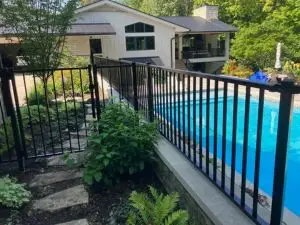
- Aluminum: The most popular pool fence choice for good reason. It’s rust-resistant, requires almost no maintenance, keeps sightlines open so you can watch swimmers from the patio, and its vertical picket design naturally meets the 4-inch sphere and non-climbable requirements.
- Vinyl: Works well when you want privacy along one side of the pool area. However, solid panels can reduce visibility, which some Ohio inspectors and safety experts may consider a supervision drawback.
- Removable mesh fencing: A strong option for families with young children. It’s difficult to climb, budget-friendly, and can be removed once children are older. However, it still needs a compliant, self-latching gate to qualify as a legal barrier.
- Wood: Offers the most customizable look but requires yearly sealing and can warp with Ohio’s freeze-thaw cycles. We typically recommend it only when it complements an existing wood privacy fence elsewhere on the property.
If you’re weighing options for the rest of the yard too, not just the pool area, our chain link vs. wood fence comparison breaks down cost and durability in more detail.
Pool fencing typically runs $17–$45 per linear foot installed in Ohio depending on material, height, and gate hardware for a full breakdown, see our current fence installation costs across Ohio.
Step-by-Step: How to Fence Your Pool the Right Way
- Call your local building department: Before designing anything, confirm your city’s exact height, setback, and gate requirements.
- Choose a code-compliant material: Select a material based on your family’s needs, preferences, and budget.
- Plan the gate location: Position the gate away from the home’s main pool access point, with the gate swinging outward.
- Pull your fence permit: Most Ohio cities require a permit specifically for pool barriers, even where standard fences under 6 feet may be exempt.
- Have it professionally installed: Ensure the fence includes self-closing hinges and a latch mounted at the required code height.
- Schedule your final inspection: Complete the final inspection before the pool is put into use.
Mistakes That Fail Ohio Pool Fence Inspections
The most common failures we see aren’t material choices. They’re details. Gate latches mounted too low. Hinges that don’t reliably self-close. Furniture or planters placed close enough to the fence to act as a step-ladder. Homeowners also tend to assume their existing backyard privacy fence automatically qualifies as a pool barrier, without checking its gap spacing or gate hardware.
These same pitfalls show up across Ohio’s broader fence height regulations, not just pool barriers, so it’s worth understanding the general rules too if you’re fencing more than just the pool area.
Frequently Asked Questions
Is a pool fence required by law in Ohio?
Yes, for in-ground and most above-ground residential pools. The exact rule comes from your city or township, though, rather than one statewide law.
How tall does a pool fence need to be in Ohio?
Most Ohio cities require a minimum of 48 inches. Several cities, including Columbus, require up to 6 feet for in-ground pools.
Can I use my existing privacy fence as a pool fence?
Only if it meets the pool-specific rules: 48+ inch height, no more than a 4-inch gap, and a self-closing, self-latching gate. A standard property-line fence often falls short on gate hardware alone.
Do above-ground pools need a fence in Ohio?
Not always. Say the pool wall is 48+ inches tall and the ladder is removable or lockable. In that case, the wall itself can serve as the barrier in many jurisdictions.
What is the best fence for a pool in Ohio?
Aluminum is the top choice for most Ohio homeowners. It’s low-maintenance and rust-resistant, and it passes code without blocking your view of the water.
Ready to Fence Your Pool the Right Way?
Every city in Central Ohio inspects pool barriers a little differently, and getting it wrong means a failed inspection and a redo. Schedule a free pool fence estimate with Scheiderer Fencing; we’ll confirm your local code and install a pool fence that’s built to pass inspection the first time.
References:
- Pool Fence Wikipedia: An overview of swimming pool fences, how they’re designed to be non-climbable, and how barrier laws differ across countries.
- U.S. Consumer Product Safety Commission Safety Barrier Guidelines for Home Pools: The federal government’s official guidelines on pool fences, gates, alarms, and covers for preventing child drownings at home.
- Centers for Disease Control and Prevention Drowning Facts: National data on drowning deaths and injuries, including why children ages 1–4 are the highest-risk group.