
Vinyl is better if you want the lowest upkeep, a clean uniform look, and a simple install. Composite is better if you want a wood-like appearance with more rigidity and no staining. Neither one is “best” for everyone. The right pick depends on your yard’s wind exposure, how much texture you want, and how long you plan to stay in the home.
If your main goal is backyard seclusion, start with our privacy fence installation overview, then come back here to choose the material.
What Each Material Actually Is
Vinyl (PVC) fencing is extruded plastic, usually hollow-core, with UV inhibitors mixed in. Panels are lightweight and are typically reinforced at gates and stress points.
Composite fencing blends wood fibers with plastic polymers. It is denser and heavier than vinyl, and it usually carries a more natural, grained look.
People searching “composite wood fence vs vinyl” are usually asking one thing: which one looks like wood without acting like wood? Both solve the rot and splinter problem. They just solve it differently.
Composite Fence vs Vinyl: Durability in Real Weather
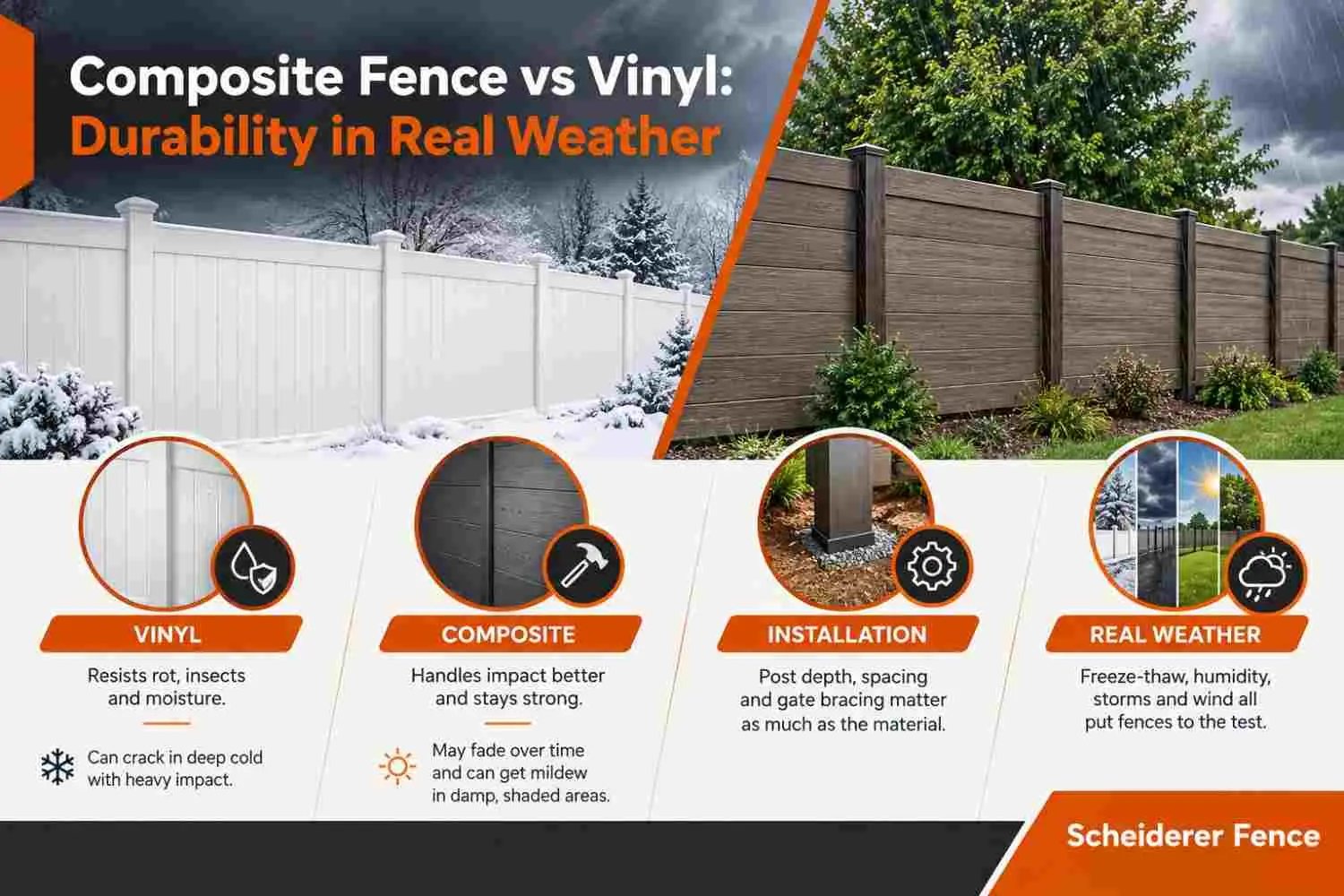
Durability is where the two materials separate, and it depends on your climate.
Central Ohio puts a fence through freeze-thaw cycles, summer humidity, spring storms, and open-field wind. Here is how each material tends to respond:
- Vinyl resists rot, insects, and moisture well. Its weak spot is impact in deep cold. A hard hit from a mower, a ball, or a fallen branch in freezing weather can crack a panel.
- Composite is denser and handles impact better. It can show surface fading over time, and in shaded, damp spots it can develop mildew that needs occasional cleaning.
- Both depend heavily on installation. Post depth, spacing, and gate bracing matter as much as the material itself.
So, does composite last longer than vinyl? Not automatically. A well-installed vinyl fence will outlast a poorly installed composite fence, and the reverse is also true. The warranty terms and the crew setting your posts matter more than the label on the box.
For a broader material comparison, our guide on wood vs vinyl fence shows how both stack up against traditional lumber.
Vinyl vs Composite Fence Cost: What Drives the Difference
We won’t throw numbers at you, because quotes change with your layout, height, gates, terrain, and material line. Here is what actually moves the total:
- Material density. Composite is heavier, so it often needs tighter post spacing and more labor.
- Style and height. Full privacy panels use more material than semi-private designs.
- Gates and hardware. Wide or double gates need reinforcement in either material.
- Site conditions. Slopes, rocky soil, and tree roots add time regardless of material.
- Lifetime upkeep. Neither needs paint or stain, so the long-term difference is small compared with wood.
Low Maintenance: Composite vs Vinyl Fence Care
Both materials are low maintenance, but not no maintenance.
|
Vinyl |
Composite |
|
| Staining or sealing | None | None |
| Typical cleaning | Occasional wash with mild soap | Occasional wash, plus mildew attention in shade |
| Common issue | Cracks from hard impact | Fading or surface scratches |
| Repair approach | Replace individual panel or rail | Replace individual board |
Expect a yearly rinse for either one. That’s the honest maintenance story.
Wood Look Composite vs Vinyl Fence: Appearance and Privacy
If you want a convincing wood tone, composite usually has the edge. Its grain and color depth read as “real” from the street. Vinyl is cleaner and more uniform, and many homeowners prefer that crisp white or tan finish, especially when matching an existing neighbor’s fence or an HOA requirement.
For privacy, both come in tongue-and-groove or solid panel styles with no gaps. Privacy comes down to the design you choose, not the material. Our team has installed vinyl for homeowners who needed a seamless color match, and that’s often the deciding factor: what does the rest of the block look like?
A Simple Framework: How to Choose in Five Minutes
Ask yourself:
- Do I want a wood look? Lean composite.
- Do I want the simplest upkeep and a classic clean finish? Lean vinyl.
- Is my yard windy or open? Prioritize post depth and panel bracing over material.
- Do I have kids, dogs, or equipment that might hit the fence? Lean composite for impact tolerance.
- Do I have HOA or neighbor-matching rules? Check those first. They may decide for you.
This is the same conversation we have on-site. In our 16+ years of fencing homes, farms, and businesses, the most common regret isn’t the material. It’s picking a style before checking the yard conditions and local requirements.
Frequently Asked Questions
Q.1 Which is better, composite or vinyl fence?
Vinyl suits homeowners who want the easiest upkeep and a uniform look. Composite suits those who want a wood-like appearance and a denser board. Your yard, style preference, and budget priorities decide.
Q.2 Is a composite fence better than vinyl?
Not universally. Composite tends to look more natural and handle impact well, while vinyl is simpler to maintain and offers a clean, consistent finish.
Q.3 Does a composite fence last longer than vinyl?
Both can last for many years when installed properly. Installation quality, post setting, and manufacturer warranty usually matter more than the material alone.
Q.4 Is composite or vinyl better for a privacy fence?
Both work. Choose a solid-panel or tongue-and-groove design in either material. The privacy comes from the style, not the material.
Q.5 Which needs less maintenance, vinyl or composite?
Both need only occasional washing and no staining. Vinyl is slightly simpler, while composite may need attention to mildew in damp, shaded areas.
Q.6 Can I mix vinyl and composite on one property?
Yes, though most homeowners keep one material per visible line for a consistent look. Gates and transitions are where mixing needs careful planning.
Final Thoughts and Next Steps
The best material is the one that fits your yard, your style, and your tolerance for upkeep. If you want to compare more options before deciding, browse our fence material options to see how different styles and finishes look and perform.
Choosing the material is only half the job. A fence is only as good as the crew that sets the posts and hangs the gates. Before any post hole is dug, we also make sure underground utility lines are marked through the 811 process, so the install stays safe for your property and your neighbors. At Scheiderer Fencing, we walk the property with you, talk through wind, drainage, and layout, and give you straight answers before anything gets built. Our fencing team works with residential, agricultural, commercial, and industrial clients, so we’ve seen how these materials behave in all kinds of conditions.