Fence post repair stakes (also sold as repair spikes or post stabilizers) can work well as a short-to-medium-term fix for a slightly leaning post typically holding for 1 to 5 years depending on soil and post condition. They are not a permanent repair. Once the underground portion of a wood post is rotted through, or the ground has significant freeze-thaw movement, stakes usually fail again, and full post replacement is the only lasting fix.
What Are Fence Post Repair Stakes, and How Do They Work?
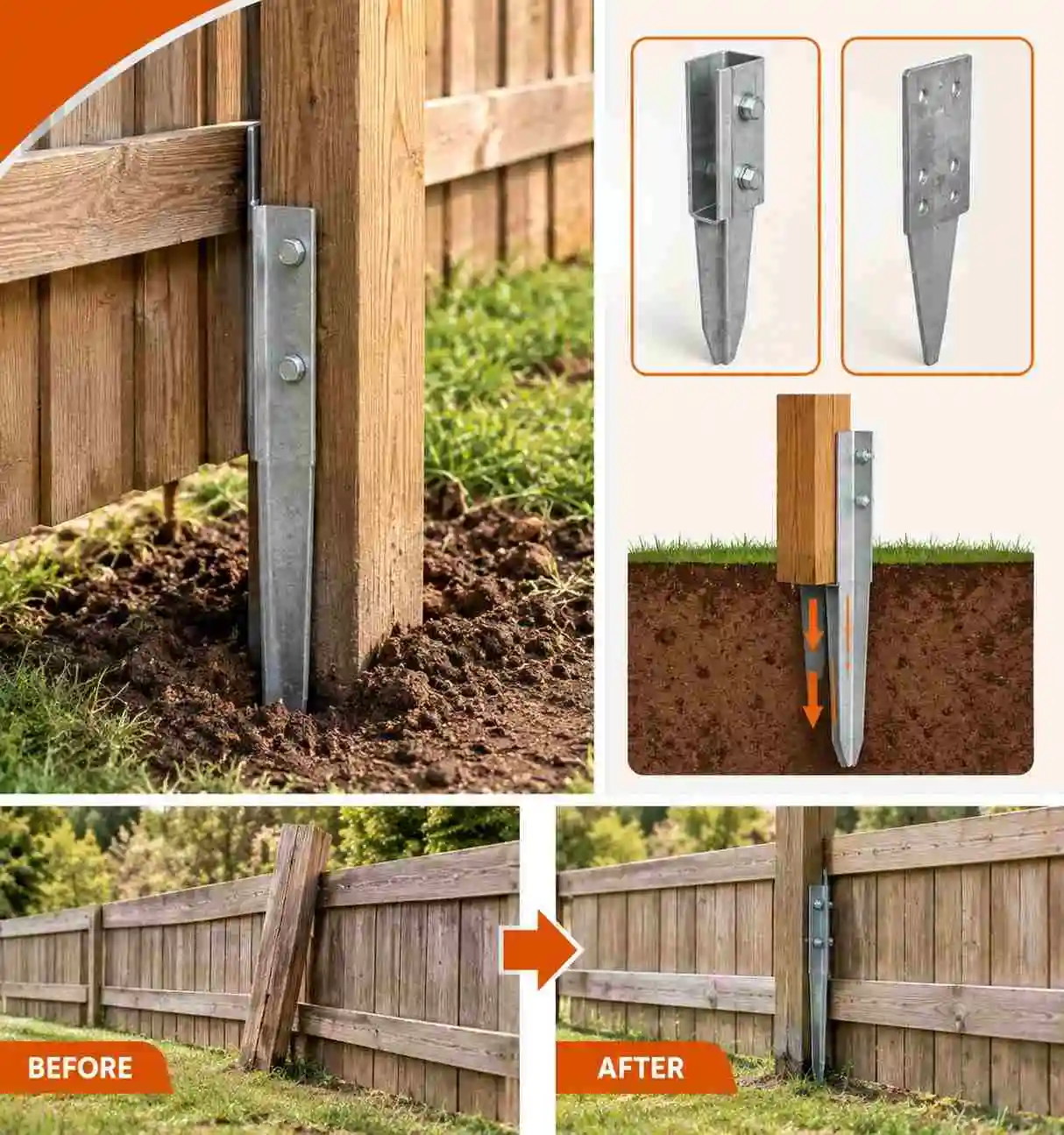
A fence post repair stake is a metal spike, usually galvanized steel driven into the ground alongside a leaning or loose post and then bolted or screwed to the post itself. Some are U-shaped and wrap around the post; others are flat plates with a socket. The idea is simple: the stake bypasses the weak or rotted section at ground level and transfers the post’s load into solid soil a foot or two below.
This is genuinely useful for one specific scenario: a post that’s leaning because the soil around it has loosened or shifted, but the wood itself is still structurally sound. In that case, a repair stake can restore rigidity without digging, mixing concrete, or removing boards which is why they’re marketed as a no-dig fence post fix. For homeowners who need a same-day answer rather than a multi-day repair, that’s an appealing trade-off, and it’s often the first thing we get asked about before someone commits to professional fence installation or a full post swap.
Do Fence Post Repair Stakes Actually Work?
Short term, yes most stakes noticeably stabilize a lean within the first season. Long term, results are inconsistent, and that inconsistency is the part most product listings don’t tell you.
In the field, we see three outcomes play out repeatedly:
- Sound post, loose soil: Stakes perform well and can genuinely last several years, sometimes longer, especially in sandy or well-drained soil.
- Partially rotted post: Stakes hold for a season or two, then the post continues to rot at the point where wood meets soil the same spot that failed originally and the lean returns.
- Heavy clay soil with freeze-thaw cycles: This is the toughest environment for any repair stake. Clay expands when saturated and contracts when it dries, and seasonal freeze-thaw heaving pushes against buried metal just as much as it pushes against wood. Stakes in this soil type fail at a noticeably higher rate than in sandy or loam soil.
So “do fence post repair stakes work” isn’t a yes-or-no question it depends heavily on why the post is leaning in the first place, which is exactly why a quick DIY fix skips diagnosing.
Why Repair Stakes Eventually Fail
Three mechanical issues explain most long-term failures:
- Rot doesn’t stop. A stake stabilizes the post’s position, but it does nothing to slow decay already in progress. If moisture caused the original rot, that moisture is still there.
- Freeze-thaw movement is relentless. Every winter-spring cycle shifts soil around any buried object, metal stakes included. Over enough seasons, that repeated movement works the stake loose the same way it worked the original post loose.
- Point-load stress. A stake bolted to one side of a post concentrates stress at the bolt points rather than distributing it the way a properly set post in concrete does. Under wind load, that connection point is often the first thing to give.
This is really the same underlying issue we cover in our guide on why a fence is leaning and how to fix it, a stake treats the symptom (the lean) without necessarily addressing the cause (moisture, soil movement, or wood decay below grade).
Repair Stakes vs. Full Post Replacement: Which Makes Sense?
Here’s a practical way to think about it, based on what we actually find when we dig up a leaning post:
A repair stake is a reasonable call when:
- The post is leaning but the wood at and below the soil line is still firm (test it with a screwdriver if it sinks in easily, the wood is compromised)
- Only one or two posts on the whole fence line are affected
- You need a fast fix before a season change, event, or sale, and understand it may need revisiting later
Full replacement is the better long-term call when:
- The post crumbles, flakes, or feels soft when probed
- Multiple posts along the same run are leaning that usually signals a systemic issue (soil type, water runoff, original installation depth) rather than one bad post
- The fence is already older and other posts are likely close behind it in the failure timeline
This overlaps with several of the patterns we outline in our post on common fence installation mistakes, undersized post depth and poor drainage around the base are two of the biggest reasons a “repaired” post fails again within a year or two.
How We Evaluate a Leaning or Rotten Post
When we’re called out to look at a single leaning post rather than a full fence project, the assessment is straightforward: check the wood condition below grade, check how many neighboring posts show early signs of the same movement, and check what’s happening with drainage and soil composition around the post line. That last part matters more than most homeowners expect a post that’s fine in well-drained soil can fail in three years in a low spot that holds water after every storm.
That diagnostic step is really what separates a lasting repair from a stake that buys you one more season. If you’re already noticing other posts along the line starting to soften or shift, it’s worth reading through our guide on the signs it’s time to replace your fence before deciding whether a stake is the right call for just one post or whether you’re looking at a bigger job.
If you’d rather have someone look at it in person before you buy anything, reach out to Scheiderer Fencing we’ve spent years working through exactly this kind of call across farms, backyards, and commercial properties, and can usually tell within minutes whether a stake will hold or whether it’s time to plan a replacement.
FAQs
Q.1 Do fence post repair stakes work on rotted posts?
Not reliably. Stakes address a loose or shifting post, not one that’s structurally rotted below the soil line. If a screwdriver sinks easily into the wood at ground level, the post needs replacement, not a stake.
Q.2 How long do fence post repair stakes last?
It varies widely by soil and post condition anywhere from one season to several years. Sandy, well-drained soil tends to hold longer; heavy clay with freeze-thaw cycles tends to fail faster.
Q.3 Can you repair a fence post set in concrete with stakes?
It’s more difficult. Stakes are designed to anchor into open soil beside the post, and a concrete footing limits how the stake can be driven and positioned. In most concrete-set situations, replacement is more effective than a stake retrofit.
Q.4 Are fence post repair stakes a permanent fix?
No. They’re best understood as a temporary-to-medium-term stabilizer, not a permanent structural repair, especially if the original cause of the lean (moisture, drainage, rot) hasn’t been addressed.
Q.5 What’s the difference between a repair stake and a post stabilizer?
The terms are often used interchangeably in product listings. Both describe a metal spike or plate anchored beside the post and bolted to it; design details vary, but the underlying mechanism and limitations are the same.
Q.6 Is a repair stake better than digging up the post myself?
For a firm post that’s simply loose, a stake is faster and avoids disturbing boards or nearby posts. For a soft or rotted post, digging it up (or having it replaced) is the only fix that actually resolves the underlying problem instead of masking it.
Conclusion
Fence post repair stakes aren’t a scam, but they’re not a permanent solution either. They buy time for a structurally sound post in loose soil, and they fall short once rot or serious ground movement is involved. If you’re not sure which situation you’re dealing with, a quick in-person look is the fastest way to avoid paying for a repair twice. Scheiderer Fencing has handled everything from single-post fixes to full farm and residential fence lines across Marysville and the surrounding area, and we’re happy to take a look before you decide which route makes sense for your fence.