
A gate that scrapes the ground every time you open it, squeals in the morning, or hangs at an odd angle isn’t just annoying it’s usually telling you the hinges have had enough. Before you start pricing out a whole new gate, it’s worth understanding what’s actually driving the cost of a hinge repair, because in most cases it’s a smaller job than homeowners expect.
Hinge replacement cost depends mainly on hinge type (standard strap hinge vs. heavy-duty or self-closing), gate material (wood, vinyl, or metal), and whether the post or frame also needs reinforcing. A simple swap on a lightweight residential gate is a modest, straightforward repair; heavier gates, custom hardware, or posts that have shifted will push the job toward the higher end. If you want an exact number for your gate, our team offers professional fence gate services and can walk you through options on-site.
Why Gate Hinges Fail Before Anything Else
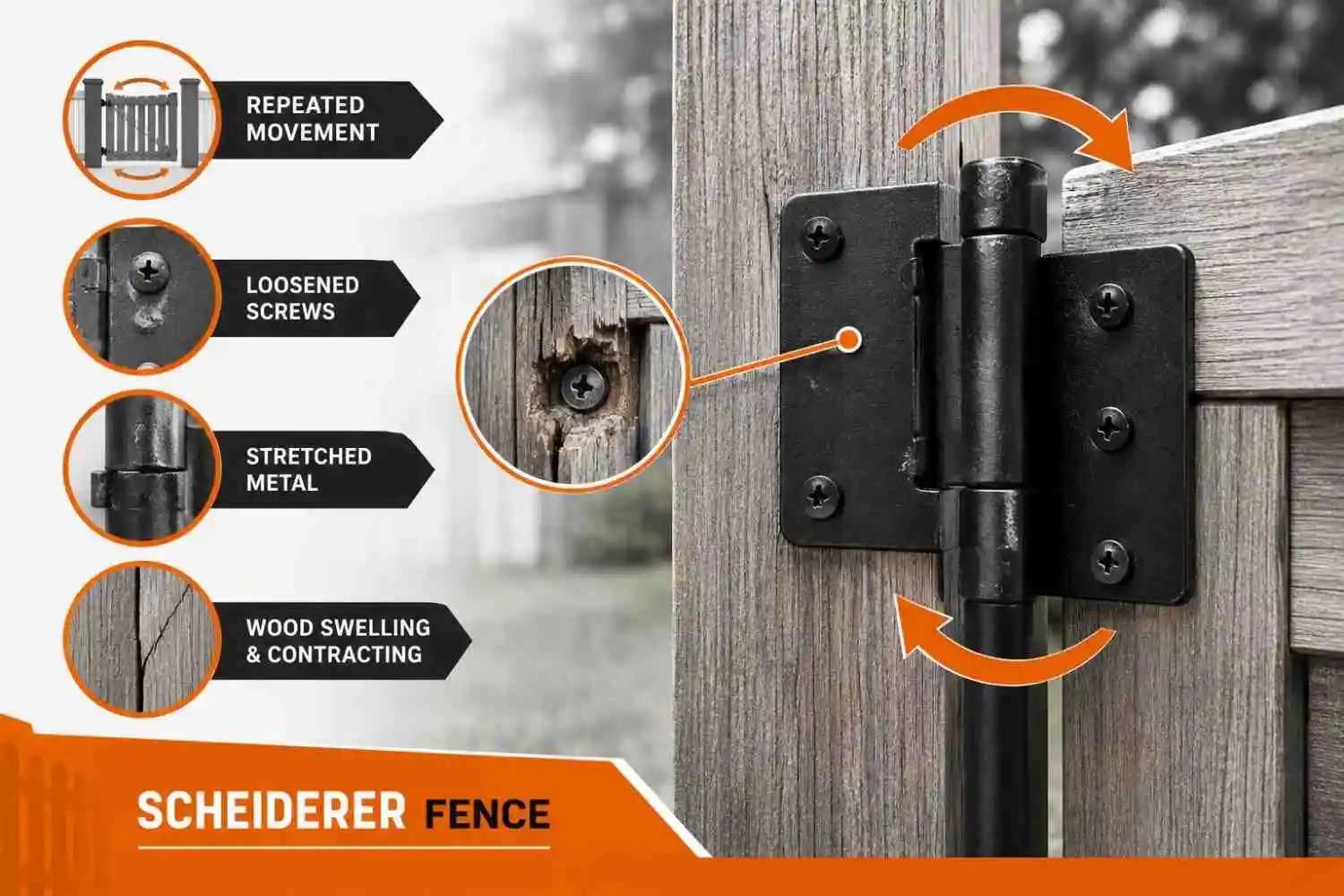
Hinges take on more stress than almost any other part of a fence. Every time a gate opens and closes, the full weight of the gate pulls against the hinge screws, the hinge plate, and whatever it’s anchored into. Over months and years, that repeated motion loosens screws, stretches metal, and wears down moving parts especially on gates that get used multiple times a day, like a side yard gate or one that leads to a pool or driveway.
Wood gates add another layer: wood swells and contracts with humidity and temperature, which slowly widens the screw holes the hinges are mounted into. That’s a big part of why a wood fence gate hinge replacement often involves more than just the hinge itself, sometimes the surrounding wood needs to be patched or reinforced so the new hardware has something solid to grip.
What Actually Changes the Price
A few factors consistently separate a quick fix from a more involved repair:
- Hinge type. A basic strap or T-hinge is the simplest to replace. Heavy-duty gate hinges, self-closing hinges (common on pool and safety-code gates), and decorative or custom hardware all cost more and can take longer to install correctly.
- Gate material. Vinyl fence gate hinges usually thread into a metal or composite insert, which is a different process than driving screws into solid wood or welding on a metal gate. Each material has its own right way to do it.
- Gate weight and size. Heavier gates, especially wide driveway gates put more strain on hinges and often need reinforced or oversized hardware to hold up long-term.
- Post and frame condition. This is the one homeowners miss most often. If the post the hinge is mounted to has rotted, split, or leaned out of plumb, replacing the hinge alone won’t fix the sagging. The post or frame needs attention first, or the new hinge will fail again within months.
- DIY vs. professional installation. A DIY fence gate hinge replacement can work fine for simple, accessible hinges, but misaligned or improperly torqued hardware is one of the most common reasons gates start sagging again soon after a repair.
Signs It’s the Hinges, Not the Whole Gate, That Need Attention
Not every dragging or crooked gate means you need a full replacement. Watch for these signs that point specifically to the hardware:
- The gate sags or drags, but the frame itself is still square and not warped
- You can visibly see stripped screws, rusted pins, or a bent hinge plate
- The gate sticks or binds only at one corner, rather than sagging evenly
- It’s gotten noticeably harder to open and close over just a few months
If those describe your gate, a hinge repair is very likely the right call. If instead the gate frame is cracked, the wood is rotted through in multiple spots, or the whole structure feels loose even with the hinges tightened, it may be a sign of a bigger issue. Our guide on signs it’s time to replace your fence breaks down when repair stops making sense and replacement takes over.
When the Problem Isn’t the Hinge at All
One of the most common misdiagnoses we see is a leaning post being mistaken for a bad hinge. If your gate has started sagging gradually, dragging more on one side than the other, or pulling away from the latch, the post itself may have shifted in the ground, especially after a wet season or a hard freeze-thaw cycle. In that case, replacing the hinge is only a temporary fix. We’ve covered this exact scenario, including how to tell the difference and what fixing it actually involves, in Why Your Fence Is Leaning and How to Fix It.
It’s also worth double-checking that the original installation wasn’t part of the problem. Hinges mounted too high, too low, or without enough support at the post can fail early no matter how good the hardware is, a pattern we walk through in more detail in our piece on common fence installation mistakes.
DIY Repair vs. Calling a Professional
A straightforward hinge swap on an easily accessible, lightweight gate is a reasonable weekend project if you’re comfortable with basic tools. But a few situations are worth handing off to a pro:
- The post shows any sign of rot, cracking, or movement
- The gate is heavy, oversized, or uses commercial-grade hardware
- You’ve already replaced the hinges once, and the sagging came back
- You want hardware installed to code (important for pool and safety gates)
Getting the alignment and anchoring right the first time is usually what separates a hinge repair that lasts for years from one that needs to be redone within a season. If you’d rather not take the chance, our team offers gate installation and repair as part of our broader residential fencing work throughout the area, and we’re happy to take a look before you commit to a full fix.
Getting an Accurate Estimate for Your Gate
Because hinge repair costs shift so much based on gate weight, material, hardware type, and post condition, the most reliable way to know what your specific job will involve is an on-site look. A quick inspection can usually tell within minutes whether it’s a simple hinge swap or something involving the post or frame, which saves you from guessing or over-fixing.
If your gate has been dragging, squeaking, or hanging crooked, it’s worth getting ahead of it before the hardware fails or the extra strain starts affecting the gate frame itself. As Scheiderer Fence, we’ve spent years diagnosing exactly this kind of issue for homeowners in Marysville and the surrounding area, and we’re glad to give you a straight answer on what your repair actually needs, no upsell to a full replacement unless that’s genuinely the right call.
Frequently Asked Questions
Q.1 Does a squeaky gate always mean the hinges need replacing?
Not always, sometimes it just needs lubrication. But if squeaking is paired with sagging, dragging, or visible rust and wear, replacement is usually the more lasting fix.
Q.2 Can I replace just one hinge, or should I do both at once?
If both hinges are the same age and have seen the same wear, it’s usually smarter to replace them together so the gate hangs evenly and you’re not back at this again in a few months.
Q.3 How long does a typical hinge replacement take?
A straightforward swap usually takes well under an hour. It takes longer if the post needs reinforcing or the hardware has to be custom-fit.
Q.4 Will a heavier-duty hinge fix a sagging gate for good?
Only if the sagging is actually caused by worn hardware. If a leaning post is the real issue, a stronger hinge will delay the problem, not solve it.
Q.5 Is it worth replacing self-closing hinges myself?
Self-closing and safety-code hinges need to be adjusted precisely to close and latch correctly every time. Getting the tension wrong can create a safety issue, so many homeowners prefer to have these installed professionally.
What’s the difference between a hinge repair and a full gate replacement?
A repair addresses the hardware while the gate frame and post are still structurally sound. Replacement makes sense when the frame itself is warped, rotted, or damaged beyond a simple fix. For pool gates, it’s also important to follow pool gate safety guidelines to ensure the gate and hardware provide the required level of safety. If you’re dealing with a stubborn gate and want a clear, honest assessment of what it actually needs, reach out to our team as local fence experts. We’ll tell you straight whether it’s a quick hinge fix or something more, and get it handled right the first time.