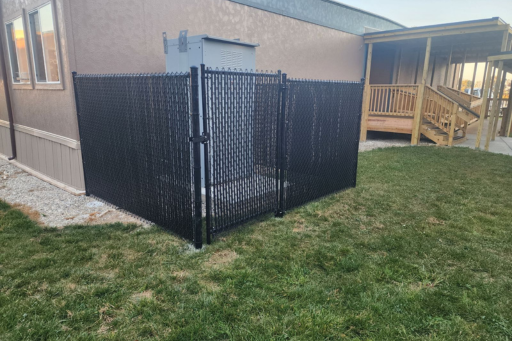
Most people focus entirely on the mesh when they’re buying a fence. That’s understandable; it’s the most visible part. But the mesh is rarely where a welded wire fence fails first.
The Protective Coating
Rust is how most welded wire fences die. Moisture gets to unprotected steel, oxidation spreads, and eventually welds start separating and wire sections lose structural integrity.
Galvanized wire has a zinc coating that acts as a barrier between the steel and the environment. Hot-dip galvanized wire, where the wire is submerged in molten zinc, builds up a thicker, more durable coating than electroplated alternatives. The difference in real-world performance is significant.
PVC-coated wire adds a polymer layer on top of galvanization, giving the steel two layers of protection. It also holds up better visually and handles UV exposure well. The catch: if the coating gets cut, scraped, or punctured and isn’t addressed, you’ve created an entry point for corrosion right through both layers.
When you’re shopping, don’t assume “galvanized” means the same thing across all products. The coating weight matters. Look at the actual specification, not just the label. Our team helps customers evaluate professional-grade fencing wire options before committing to a product, because this single decision affects everything downstream.
Wire Gauge: Thicker
Heavier gauge wire resists bending, physical impact, and sustained pressure better than lighter options. A 12.5-gauge wire holds up differently from a 14-gauge wire when something pushes against it repeatedly.
But heavier gauge isn’t automatically better for every situation. A garden fence doesn’t need the same wire specification as a dog run that sees a 70-pound dog launching at it daily. Matching gauge to actual use is the right call; overkill adds cost without benefit, and undersizing creates early failure points.
The question “what gauge is welded wire fencing?” doesn’t have one answer. The right answer depends on what you’re containing, what’s trying to get in, and how much physical pressure the fence will face over its life.
Post Quality and Spacing
Here’s something that surprises a lot of homeowners: the mesh can still be perfectly sound while the fence is failing because the posts are moving.
Freeze-thaw cycles through a Central Ohio winter are hard on fence posts. Soil expands when it freezes and contracts when it thaws. Posts that aren’t set correctly, at the right depth, in the right material, shift over time. When posts lean or shift, mesh gets distorted, tension is lost at connection points, and sections start to pull away.
Post spacing also matters. Too much distance between posts lets the mesh sag or flex under pressure. The correct spacing depends on wire type, fence height, terrain, and expected load, not a universal number you find on a chart.
Climate and Soil Conditions
Central Ohio puts outdoor fencing through real stress. Wet springs, humid summers, heavy storms, and winter freeze-thaw cycles all take a toll. UV exposure degrades PVC coatings over time. High winds and falling branches create impact damage that exposes steel underneath the coating.
None of this means welded wire is a bad choice for this region; it means the installation has to account for these conditions. Proper post depth, quality coating, and keeping vegetation off the fence line make a measurable difference in how a fence handles Ohio weather year after year.
Galvanized vs. PVC-Coated: Which Lasts Longer?
Both can reach the 20–30 year range when the underlying wire and installation are solid. The practical differences come down to environment and appearance.
Galvanized welded wire is the standard choice for functional fencing in gardens, agricultural boundaries, and light property lines. Hot-dip galvanized products outperform lightly coated alternatives significantly. In consistently dry conditions with reasonable maintenance, a quality galvanized fence can last decades.
PVC-coated welded wire adds another protective layer and tends to hold up better in applications with frequent moisture exposure or where appearance matters: residential yards, visible garden areas, pet enclosures. The polymer coating also makes it more resistant to abrasion from contact.
Neither is automatically superior. The right choice depends on the application, the environment, and what you’re trying to achieve.
Welded Wire vs. Woven Wire: Which One Holds Up Better?
Welded wire has fixed intersections; every crossing point is welded. That creates a rigid, consistent grid. It’s predictable, clean, and holds its shape well under moderate conditions.
Woven wire uses interlocked construction, which gives it flexibility. That flexibility can be an advantage when a fence runs over uneven terrain or faces repeated lateral pressure from livestock.
For gardens, pet areas, and residential boundaries, welded wire is generally the practical choice; it maintains consistent openings and holds its form. For high-pressure livestock applications where animals are constantly pushing and testing the fence, woven wire or high-tensile systems are often better matched to the actual forces involved. Choosing the wrong construction for the application shortens useful life even when the material quality is high.
Signs Your Welded Wire Fence Is Starting to Fail
Age alone doesn’t tell you much. A 15-year-old fence in good condition is worth keeping. A 7-year-old fence that was poorly installed and never maintained can already be showing serious problems.
Watch for these indicators:
- Rust spreading beyond isolated surface spots
- Welds separating or broken at intersection points
- Sections of mesh that are bent or won’t hold their shape
- Posts leaning, rocking, or showing gaps in the soil around them
- Coating damage that hasn’t been addressed
- Mesh pulling away from posts at attachment points
- Gates that no longer align or latch correctly
Small problems caught early are repairs. The same problems ignored become replacements.
How to Get More Years Out of a Welded Wire Fence
Maintenance doesn’t have to be a major time commitment. The basics go a long way:
Clear vegetation along the fence line. Grass, vines, and branches hold moisture against the wire and block airflow. Keeping the fence line open lets the wire dry out after rain.
Check posts after winter. Look for movement, leaning, or gaps developing around post bases. Catching post issues early prevents mesh distortion.
Repair coating damage when you find it. A small scratch or scrape that exposes steel isn’t an emergency, but it becomes one if ignored for a few seasons. Touch-up products exist for both galvanized and PVC-coated wire.
Inspect gate hardware and connections. Gate posts, hinges, and fasteners take more stress than the fence line itself. They deserve a separate look.
Don’t overload the fence. A fence designed for a garden doesn’t belong in an application with animals that push, dig, or test it constantly. Matching the fence to the actual job protects the investment.
Weather plays a bigger role than most people expect. Understanding how Ohio’s seasonal conditions affect fence lifespan helps you time inspections and maintenance around the conditions that do the most damage.
Welded Wire for Dog Runs: What to Know
Welded wire works well for many dog enclosures because the fixed grid openings are easy to control and the rigid structure holds its shape under contact. But the fence has to match the dog’s behavior, not just the application category.
A digger needs reinforcement or aprons at the fence base. A jumper needs adequate height and sometimes an inward angle at the top. A large, energetic dog that repeatedly launches at the mesh puts different demands on wire gauge and post spacing than a small breed that rarely tests the barrier.
For dogs that dig, climb, or jump, there’s more to the design than picking the right material. See our breakdown of the best fence options for dogs that dig or jump for application-specific guidance.
When to Replace vs. When to Repair
Replace based on condition, not calendar. A fence that still has intact coating, sound welds, and stable posts doesn’t need replacement just because it’s been out there for years.
Replacement makes sense when corrosion is widespread, welds are failing repeatedly across multiple sections, posts are unstable and can’t be properly reset, or repairs are no longer restoring useful function.
If you’re evaluating an existing fence and aren’t sure which category it falls into, a professional assessment is worth more than guessing. For residential fencing projects in Marysville and Central Ohio, Scheiderer Fencing provides honest evaluations, whether the answer is repair, replacement, or a different fence type entirely.
Frequently Asked Questions
Q.1 How long does a welded wire fence typically last?
Most quality welded wire fences last 15 to 30 years. Galvanized and PVC-coated options with good installation can reach the upper end of that range.
Q.2 Does galvanized welded wire last longer than uncoated?
Yes, meaningfully so. The zinc coating on galvanized wire slows corrosion significantly. Hot-dip galvanized products provide better protection than lightly coated alternatives.
Q.3 What causes welded wire fencing to rust?
Moisture reaching unprotected steel is the primary cause. This happens through coating damage, inadequate galvanization, exposed weld points, and trapped moisture from vegetation or debris against the fence.
Q.4 Is welded wire or woven wire more durable?
Neither is universally more durable; it depends on the application. Welded wire suits rigid, consistent-grid applications well. Woven wire handles repeated livestock pressure and terrain changes better.
Q.5 What is the best gauge for welded wire fencing?
It depends on the use. Heavier gauges (like 12.5) handle more physical pressure; lighter gauges work for lower-stress applications like gardens. Matching gauge to actual use matters more than picking the heaviest option available.
Q.6 Can a welded wire fence last 20 years or more?
Yes. With quality coating, appropriate gauge, correct installation, and reasonable maintenance, reaching 20 to 30 years of service life is realistic.
Conclusion
A welded wire fence that lasts 25 years doesn’t happen by accident. It starts with selecting the right wire specification for the job, setting posts correctly for the soil and climate, using quality coating, and doing the small maintenance tasks that prevent small problems from becoming big ones. At Scheiderer Fencing, we’ve been helping homeowners, farms, and businesses across Marysville and Central Ohio get that kind of service life from their fencing investments. The goal is never just to install a fence; it’s to install the right fence for what you’re actually trying to accomplish.