
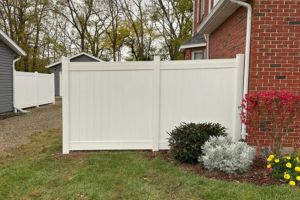
You’ve finally decided to put up a fence. Maybe you want more privacy from the neighbours, a safe yard for your kids, or just a clean border around your property. Whatever the reason, building a fence in Ohio isn’t as simple as digging a few post holes and calling it a day.
Ohio fence height regulations can catch even experienced homeowners completely off guard, and the cost of getting it wrong isn’t just a slap on the wrist. You could be forced to tear the whole thing down at your own expense.
This guide walks you through everything you need to know from Ohio fence height limits and permit requirements to HOA rules, property line setbacks, and how to handle neighbour disputes before a single post hits the ground.
What Are the Fence Height Limits in Ohio?
Ohio does not have a single statewide fence height law that applies to all residential properties. Instead, height limits are set at the local level through city zoning codes and county ordinances. That said, most Ohio communities follow a consistent general pattern:
- Front yard fences: Maximum height of 4 feet (some cities restrict it further to 3 feet or even 30 inches)
- Backyard and side yard fences: Maximum height of 6 feet without requiring a building permit
- Fences over 6 feet: Classified as a structure, require a full building permit and inspection
So if you’re planning a standard 6-foot privacy fence in your backyard, you’re likely within the legal limit for most Ohio municipalities. But the moment you try to install that same fence in your front yard or along a corner street, you could be in violation before the concrete even sets.
Does Ohio Have a Statewide Fence Law?
Yes, but it probably doesn’t apply to you.
Ohio Revised Code Chapter 971 is the main state law governing fences. However, its reach is much narrower than most people assume. Chapter 971 primarily covers partition fences between adjoining rural and agricultural properties. It governs who pays to build, maintain, and repair shared fences on farmland, not the kind of situation most people face when they’re looking to install a privacy fence for backyard use in a residential neighbourhood.
Within city limits and platted residential subdivisions, Chapter 971 generally does not apply. Local zoning codes take over and set the rules for height, materials, setbacks, and permits.
If you live in a city or suburb in Ohio, your local municipality, not the state, controls your fence height regulations.
Ohio Fence Height Rules by City: Columbus, Cleveland, Cincinnati & More
Since local codes control, here’s a breakdown of how some of Ohio’s major cities handle residential fence height:
Columbus Fence Height Rules
Columbus follows its own zoning code closely:
- Front yards are generally limited to 30 inches due to vision clearance requirements
- Side and rear yards allow fences up to 6 feet without a building permit
- Fences over 6 feet require a building permit and zoning review
- Corner lots face additional restrictions; fences cannot block drivers’ sightlines at intersections
Cleveland and Akron Fence Height Rules
Cities like Cleveland and Akron typically require a building permit for fences that exceed 6 feet in height. The general pattern mirrors most of Ohio: 4 feet for front yards and 6 feet for backyards.
Dublin, Ohio Fence Rules
Dublin is notably stricter. A front yard fence cannot exceed 4 feet, and a privacy fence in the rear yard also cannot exceed 4 feet in many zoning districts. This surprises a lot of homeowners who assume backyard = 6 feet everywhere.
Canal Winchester, Gahanna, and Franklin County Areas
- Canal Winchester: Front yard fences max out at 3 feet; rear yard fences at 6 feet
- Gahanna: Front yard fences must be decorative/open style and cannot exceed 42 inches; rear yard privacy fences max at 6 feet
- Franklin County (unincorporated areas): Privacy fences cannot exceed 6 feet
The key takeaway? Always check with your specific local zoning office, not just the general state guidelines.
Do You Need a Permit to Build a Fence in Ohio?
This is where a lot of homeowners get tripped up, so pay close attention.
The Residential Code of Ohio states that a building permit is not required for a fence 6 feet or less in height. Sounds simple, right? Here’s the catch that most people miss: A building permit and a zoning permit are two different things.
Many Ohio cities require a zoning permit or certificate of compliance for any fence, even one under 6 feet that’s technically exempt from the building code. The building permit checks structural safety; the zoning permit checks that your fence meets local rules for height, placement, materials, and visibility.
Skipping the zoning step can still result in a code violation, even if you never needed a building permit.
When a building permit IS required:
- Any fence over 6 feet in height
- Pool fencing (in most municipalities)
- Fences in designated flood plains or historic districts
Pro tip: Before you buy a single post, call your local zoning office or check your city’s building department website. A 15-minute phone call can save you thousands in removal and reinstallation costs.
What About Pool Fences? Are There Special Ohio Fence Regulations?
Yes, and these are strictly enforced.
Most Ohio municipalities require a minimum 48-inch (4-foot) barrier around any residential swimming pool or hot tub. The gate on that barrier must be self-closing and self-latching.
This isn’t just a zoning issue; it’s a serious liability matter. Skipping pool fence requirements can void your homeowner’s insurance policy if an accident occurs. This is one area where you absolutely do not want to cut corners.
HOA Fence Rules in Ohio: A Separate Layer of Regulations
If you live in a neighbourhood governed by a homeowners’ association, you’re dealing with an entirely separate rulebook, and Ohio law gives HOAs significant authority over your fence. This matters a lot when you’re evaluating the best fencing options for your property, because a material or style that looks perfect online may be outright banned by your HOA’s governing documents.
Under Ohio’s Planned Community Law (Ohio Revised Code Chapter 5312), an HOA’s board of directors can enforce all provisions in the community’s Covenants, Conditions, and Restrictions (CC&Rs). In practice, this means HOAs in Ohio can legally control:
- Fence height: often stricter than city codes; some HOAs limit backyard fences to 4 feet even where the city allows 6
- Materials: chain link is frequently prohibited; wood, vinyl, or aluminum are common approved options
- Colors and staining: yes, some HOAs specify the exact color or stain shade
- Style and design: picket, privacy, split rail, wrought iron, all potentially subject to approval
- Placement: how far back from the street or property line the fence must sit
HOAs are especially common around Columbus (Dublin, Westerville, New Albany, and Powell); Cleveland (Solon, Hudson, and Avon); and Cincinnati (Mason, West Chester, and Liberty Township).
Critical point: HOA approval is a completely separate process from your city permit. You must secure both before starting work. We’ve seen homeowners get city approval and start building, only to receive a cease-and-desist from their HOA the same week.
Ohio Fence Setback Requirements and Property Line Rules
Can You Build a Fence on the Property Line in Ohio?
Yes, but with conditions.
In Columbus, for example, fences 6 feet and under can generally go right up to the rear property line with no setback required. However, fences taller than 6 feet are treated as structures and are subject to setback requirements for side yards.
Other Ohio cities apply similar rules, particularly in residential zones. Before installing any fence near a property line, the smartest first step is to hire a licensed surveyor to confirm your exact boundary lines. Even a fence that’s a few inches over the line can trigger a legal dispute or force an expensive removal.
Corner Lot Fence Rules in Ohio
If you own a corner lot, expect stricter restrictions. Many Ohio cities define a sight triangle at intersections, a designated area near street corners where fence height is capped much lower (sometimes as low as 2.5 feet) to maintain driver and pedestrian visibility.
In Columbus, a strict 30-foot visibility triangle is enforced at street intersections. Installing a 6-foot fence that blocks this triangle is a code violation, and the city can require you to remove it.
Utility Easements
Here’s another detail that catches homeowners off guard: if a utility company has an easement recorded across your property, you cannot build within that easement without written permission. Utility companies have the legal right to remove obstructions at the homeowner’s expense. Always check for easements before planning your fence layout.
Ohio Adverse Possession and Fence Placement
This is a legal concept most homeowners have never heard of, but it’s important if your fence touches a property line.
Under Ohio’s adverse possession law, a neighbour who continuously and openly uses or maintains a strip of land for at least 21 years could potentially claim ownership of that land. A misplaced fence that encroaches on a neighbour’s property, even by a few inches, could set that clock ticking.
This is another reason to get a professional property survey before installing any fence near a boundary line and why working with experienced fence installers near me who know local property laws can save you from a very expensive mistake down the road.
People Also Ask: Ohio Fence Regulations
1. Do I Need to Notify My Neighbour Before Building a Fence in Ohio?
Ohio law does not require you to notify your neighbour before building a fence on your own property. But doing so is strongly recommended. A simple conversation can prevent misunderstandings, keep relationships civil, and avoid future disputes about maintenance or encroachment.
2. Who Pays for a Fence on a Property Line in Ohio?
For shared boundary fences in rural areas, Ohio’s Line Fence Law (Chapter 971) governs who pays. However, for most residential properties, this law does not apply. If both neighbours agree to share a fence, costs are typically split. If only one owner wants the fence, that owner generally covers the full cost. Always get any cost-sharing agreement in writing.
3. What Happens If I Build a Fence That Violates Ohio Regulations?
Violations are taken seriously. A neighbour or city inspector can file a complaint, which triggers an inspection. If a violation is confirmed, you’ll receive a notice requiring you to correct the issue within a set timeframe. Continued noncompliance can result in:
- Monetary fines
- A court order to modify or remove the fence entirely
- You bearing the full cost of removal
4. Can My HOA Overrule My City’s Fence Permit?
Yes. HOA covenants are legally binding under Ohio law and can impose restrictions stricter than city zoning codes. Even if you have a valid city permit, your HOA can require you to remove a fence that doesn’t comply with their CC&Rs. Always get written HOA approval from the architectural review committee before starting.
What Fence Materials Are Restricted in Ohio?
Material restrictions vary by city and HOA. In most Ohio residential areas, barbed wire and electric fences are prohibited. Chain link is frequently restricted or banned by HOAs. Wood, vinyl, and aluminium are the most widely accepted materials. Always check both your local zoning code and your HOA documents before choosing materials.
The 5-Step Checklist Before Building a Fence in Ohio
To avoid costly mistakes, work through this before you do anything else:
- Get a property survey: confirm exact boundary lines with a licensed surveyor
- Check your local zoning code: contact your city or county zoning office to confirm height limits, setback rules, and permit requirements
- Review your HOA documents: read the CC&Rs and submit your fence plans to the architectural review committee for written approval
- Apply for permits: secure both a building permit (if required) and a zoning permit/certificate of compliance
- Talk to your neighbor: not legally required, but always a smart move
Final Thoughts
Ohio fence height regulations aren’t designed to make your life difficult. They exist to protect your safety, preserve neighbourhood aesthetics, maintain traffic visibility, and protect property rights: yours and your neighbours’.
The most expensive mistakes homeowners make come from skipping the research phase: not checking local ordinances, not getting a property survey, or not reading HOA documents before ordering materials. By the time the fence is up, reversing those mistakes costs far more than the fence itself.
Take the time upfront. A quick call to your local zoning office and a review of your HOA documents can save you thousands, and a whole lot of stress, down the road.