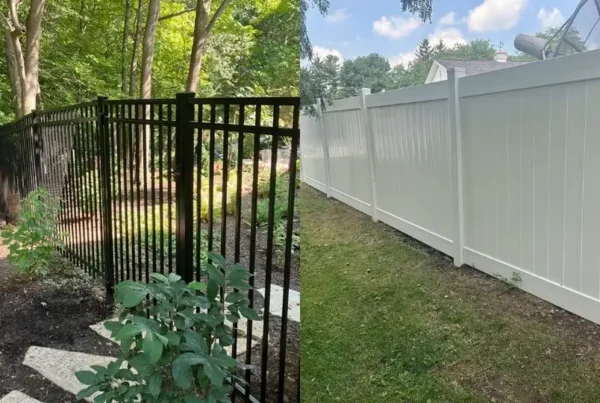
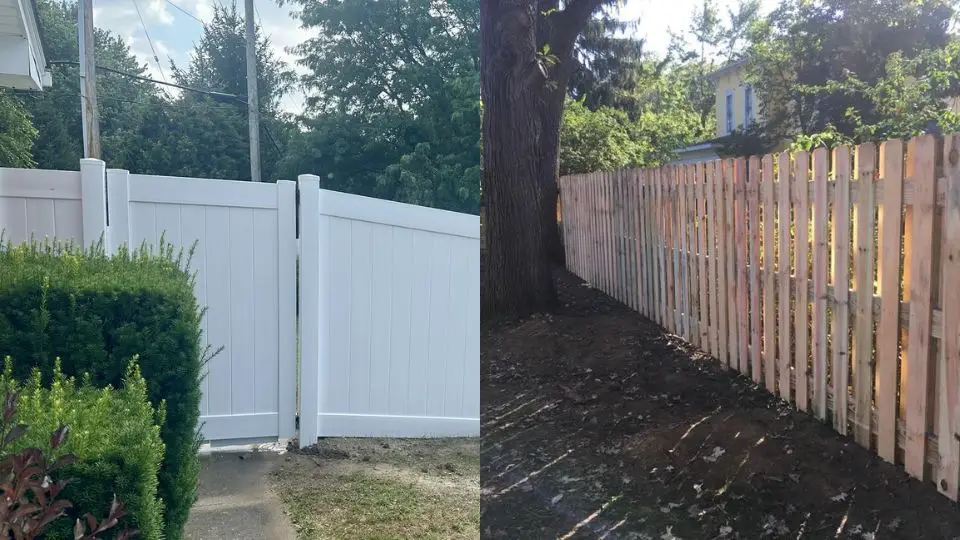
If you’re an Ohio homeowner trying to decide between a privacy fence and a semi-privacy fence, it really comes down to two things: what you want to block and what you want to keep.
Privacy fences block everything completely, ideal if you have close neighbors, a pool, or a backyard you actually want to disappear into. Semi-privacy fences let in air and light while still giving you solid coverage, better for open lots, windy yards, or HOA-managed communities.
And honestly, that’s most of it. But the part that actually trips people up isn’t the fence itself, it’s the stuff nobody warns you about. Wrong HOA call, skipped permit, posts set too shallow for Ohio clay, and suddenly you’re redoing work you already paid for, which is why it helps to look at all your residential fencing options before making a call.
What’s the Real Difference Between a Privacy Fence and a Semi-Privacy Fence?
A lot of Ohio homeowners think these two are basically the same thing. They’re not, and the difference matters more than most people expect.
- A full privacy fence has boards packed tightly together with zero gaps. You can’t see through it. Your neighbors can’t see you. It completely blocks the view from the street, from next door, from everywhere. Usually 6 to 8 feet tall, it’s exactly what it sounds like: total privacy.
- A semi-privacy fence has slight spacing between the boards or uses a pattern like shadowbox or lattice that lets some light and air pass through. You still get a strong sense of privacy, maybe 70 to 85 percent, but it doesn’t feel like a wall around your yard.
Both look great, both do the job. But they’re built for different situations, and choosing the wrong one is a mistake Ohio homeowners make more often than you’d think.
When a Full Privacy Fence Is the Right Call
A few situations where a full privacy fence just makes sense, and if one of these sounds like your yard, don’t overthink it:
- You live on or near a busy road: Lots of Ohio neighborhoods, especially around Dayton, Columbus suburbs, and Cincinnati’s north side, sit right off high-traffic routes. A solid fence blocks the noise, the headlights at night, and the constant feeling that strangers can see into your yard.
- You have a pool or hot tub: Ohio law requires barrier fencing around residential pools. A solid privacy fence meets that requirement and keeps your backyard completely to yourself. We’ve installed barrier fencing around dozens of Ohio pools; inspectors here are strict about height and gate latches, and we’ve never had a job fail inspection.
- You have dogs: Dogs lose their minds over what they can see. Solid fence means no squirrel, no barking fit, no 6 am chaos along the fence line. Simple fix, honestly.
- You just want to be left alone in your own yard: That’s completely valid, and a full privacy fence delivers exactly that.
When a Semi-Privacy Fence Actually Makes More Sense
Semi-privacy fences get underestimated a lot. Here’s when they’re actually the smarter choice:
Your HOA has restrictions
A lot of planned communities in Dublin, Westerville, Mason, and similar Ohio suburbs don’t allow 100% solid fencing along certain property lines or front yards. We’ve worked in Dublin, where the HOA rejected the first design twice, and the shadowbox ended up being the fix that finally got approved.
Your yard is exposed and windy
This is the one that catches people off guard. A solid fence in an open yard basically becomes a sail, and Ohio spring storms will test that fast. We’ve seen perfectly good fences lean badly after one rough March. Semi-privacy fences let wind pass through, which means they hold up significantly better over time.
Budget matters
Less material means lower cost, usually 15 to 25 percent less than a comparable full privacy fence. Same great look, less money out of pocket.
You want the yard to feel open, not closed in
Some people love the idea of privacy but hate the feeling of being surrounded by walls. Semi-privacy gives you the boundary without the bunker feeling.
Popular Privacy Fence Styles Ohio Homeowners Are Choosing
Whether you go full or semi-privacy, here are the styles showing up most in Ohio yards right now:
- Shadowbox (Board-on-Board): Boards alternate on each side of the rail. From a distance, it reads as semi-private. Up close, it’s very private. Also handles Ohio wind well. In our years of installing fences across Central Ohio, our team at Scheiderer Fencing has seen Shadowbox become a top choice for handling heavy Midwest wind gusts without bowing.
- Stockade / Dog-Ear: The classic tight-board full privacy fence. Clean, affordable, and everywhere across the Ohio suburbs. Great for high-traffic property borders.
- Horizontal Slat Fence: Modern look with boards running sideways. Can be spaced for semi-privacy or tight for full privacy. Really popular in newer Dayton subdivisions and Columbus neighborhoods right now.
- Lattice-Top Privacy Fence: Six feet of solid boarding with a decorative lattice section on top. Adds visual height, allows some airflow, and looks finished and intentional. Our crews frequently install this style in Columbus and Dayton suburbs for homeowners who want extra height without making their patio feel like a bunker.
Ohio-Specific Things You Need to Know Before You Buy
A lot of Ohio homeowners skip this and end up with fines or having to tear down work they already paid for.
- Permits: Most Ohio municipalities require a permit for any fence over 4 feet in the front yard or over 6 feet in the back. Franklin County, Delaware County, and Union County all have slightly different setback rules. What flies in Marysville might need a variance in Powell. Check before you build.
- HOA approval: Submit your plans before you order materials. Ohio HOAs can legally require specific heights, materials, colors, and opacity levels. Getting this wrong is an expensive mistake.
- Ohio winters: The freeze-thaw cycle here is rough on wood. Cedar and pressure-treated pine handle it best. Vinyl is your lowest-maintenance option and holds up well through Ohio’s cold, wet winters. Whatever you choose, make sure posts are set at least 36 inches deep to beat the frost line. One thing people forget, before any digging happens, Ohio 811 needs to mark your underground utilities. It’s not optional, and skipping it creates problems nobody wants mid-project. We handle that call and the permit paperwork on every job we do, so it’s one less thing on your plate.
- Clay soil: Ohio soil is heavy with clay in most areas. It heaves in winter. Shallow or improperly set posts will shift and lean. Depth and proper installation matter here more than in most other states.
Privacy Fence vs Semi-Privacy Fence: Side-by-Side Comparison
|
Feature |
Full Privacy Fence | Semi-Privacy Fence |
|
Visibility Block |
100% | 60–85% |
|
Airflow |
Minimal | Good |
|
Wind Resistance |
Lower | Higher |
| Cost | Higher |
15–25% Less |
| HOA Friendly | Sometimes restricted |
Usually approved |
| Best For | Pools, street-facing yards, and dog owners |
HOA neighborhoods, open or windy lots |
| Feel | Solid, enclosed |
Open, architectural |
FAQs
What is the most private fence style you can get?
Stockade or dog-ear, 6 to 8 feet. That’s your answer. One thing worth knowing, though, wood boards shrink as they age, so small gaps show up eventually. Vinyl stays tighter longer if that’s going to bother you.
Do I need a permit for a privacy fence in Ohio?
Most Ohio municipalities require one for fences over 4 feet in the front yard or over 6 feet in the rear. Always confirm with your local zoning office before you start. Not sure what your township requires? Call us, we’ve pulled permits across multiple Ohio counties and can usually tell you what to expect before you even submit paperwork.
Can a semi-privacy fence actually hold dogs in?
Yes, just make sure spacing is 2 to 3 inches or less. Anything wider and you’re asking for trouble with smaller dogs, especially. Shadowbox is a great semi-private option for dogs because it blocks their view completely while still allowing airflow.
How long does a wood privacy fence last in an Ohio climate?
Pressure-treated pine typically lasts 15 to 20 years. Cedar can go 20 to 30 years with care. Staining or sealing every 2 to 3 years makes a big difference in Ohio’s humidity and freeze-thaw conditions.
So Which One Should You Actually Choose?
Most people reading this already know which way they’re leaning. If you’re still genuinely torn, it’s usually because something specific about your yard, lot shape, HOA rules, neighbor situation, needs a real look before you decide. That’s what site visits are for. Lot grade, soil type, and local permit rules all matter in ways that are hard to judge from a screen.
We’re based near Marysville and work with Ohio homeowners, farms, and commercial properties. Local zoning, Ohio weather, and clay soil- we deal with all of it every day. If you want someone who actually knows your area, that’s us.
Contact us today to discuss your project and get an estimate for your yard.