
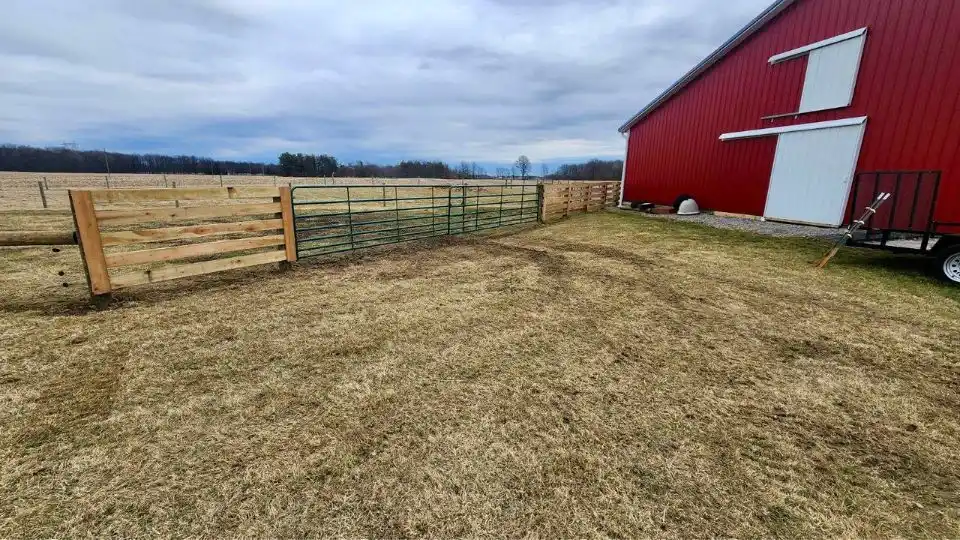
Yes, in most Ohio cities and townships, you do need a permit to install a fence. But here’s what surprises most people: Ohio actually has two types of permits, a building permit and a zoning permit, and many cities require both, even for a basic 6-foot backyard fence.
Skip either one, and you could face fines, forced removal, or major complications when selling your home down the road. Whether you’re a homeowner, business owner, or farmer, this guide breaks down exactly what applies to your property.
Does Ohio Have a Statewide Fence Permit Law?
Not exactly. Ohio enforces a statewide building code through certified local building departments. The Ohio Board of Building Standards sets the minimum construction baselines that apply across the state. Local municipal governments can add stricter requirements, but they cannot reduce the state minimums.
Your specific city, township, or county controls the enforceable rules. A fence layout that is perfectly fine in one Columbus suburb may require a full permit and variance application in the next town over.
Here is the structural part most generic online guides skip: building codes and zoning codes are two completely different things, and Ohio cities frequently require you to clear both.
- Building Permits: The Residential Code of Ohio officially exempts residential fences 6 feet or shorter from a structural building permit.
- Zoning Permits: Many cities, including Columbus, Cincinnati, and Dayton, require a separate zoning permit, zoning certificate, or certificate of compliance for any fence, regardless of how short it is. The zoning review strictly confirms that your fence meets placement, setback, height, and material rules for your specific parcel zone.
Before you dig a single post hole or order materials, call both your local building department and your municipal zoning office to verify your neighborhood’s exact map requirements.
Ohio Fence Permit Requirements: Homeowners
|
Permit Type |
When Required |
Who Issues It |
| Building Permit | Fences over 6 feet tall |
Local Building Department |
| Zoning Permit | Any fence, regardless of height (in many cities) |
Local Zoning / Planning Office |
Dayton requires a zoning permit for all fences of any height; this is entirely separate from the structural building permit exemption in the state code. A structural building permit is only triggered for fences over 6 feet. To get your zoning paperwork approved, you must contact the Zoning Administrator before construction.
In Columbus, fences 6 feet and under generally bypass the building permit desk, but anything taller requires a flat $300 building permit processing fee.
Common Height Rules for Ohio Homeowners
Most jurisdictions allow rear and side yard fences up to 6 feet without a structural permit. Front yard fences face much stricter limits to maintain neighborhood sightlines.
|
Location |
Typical Max Height |
|
Backyard / Side Yard |
Up to 6 feet |
| Front Yard (Street-Facing) |
Up to 4 feet |
| Corner Lots |
Special visibility triangle rules apply (Strictly enforced) |
Material and Property Line Rules for Ohio Homeowners
Ohio cities generally allow the standard range of residential fence materials: wood, vinyl, chain-link, aluminum, wrought iron, and composite. Local restrictions focus heavily on what is prohibited:
- Prohibited Materials: Barbed wire, razor wire, and electric fences are banned in residential zones across virtually all Ohio municipalities.
- Chain-Link Restrictions: Chain-link is widely permitted in side and rear yards, but frequently faces outright bans in front yards or areas highly visible from the street. Some strict suburbs prohibit residential chain-link entirely.
- The Finished Side Out Requirement: This rule trips up many DIYers. While Columbus and Cincinnati do not explicitly enforce it at the city level, many suburban communities, particularly in the Cleveland, Akron, and Columbus metro areas, require the decorative, clean side of the fence to face outward toward your neighbors.
1. Setback Rules
Setback requirements define exactly how far a fence must sit from your property lines, streets, sidewalks, or other structures. These rules are set by local zoning codes. For example, in Columbus, fences cannot sit directly on shared property lines without meeting specific setback distances or formal neighbor sign-offs.
2. HOA Rules vs. City Rules
If your property is located within an HOA-managed community, the association’s private covenants impose rules on top of city and state codes. HOAs commonly regulate specific fence materials, exact paint/stain colors, and height restrictions far more strictly than local laws. HOA approval is a separate process from your city’s permit, and you must secure both before starting work.
3. Pool Fencing: A Non-Negotiable Case
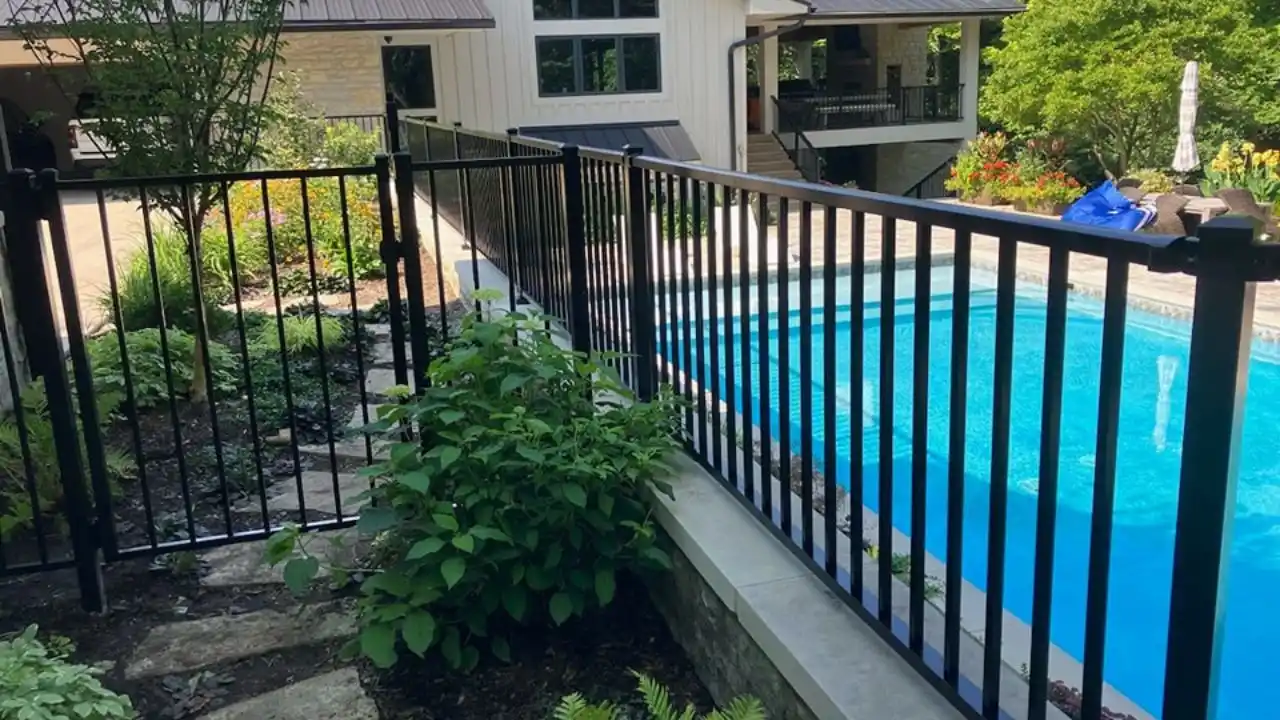
Pool fencing in Ohio is strictly enforced. Most municipalities mandate a minimum 48-inch (4-foot) pool barrier featuring a self-closing, self-latching gate around any residential swimming pool or hot tub. This is both a strict permit requirement and a major liability issue; skipping this step can void your homeowner’s insurance policy.
Ohio Fence Permit Requirements: Commercial Properties
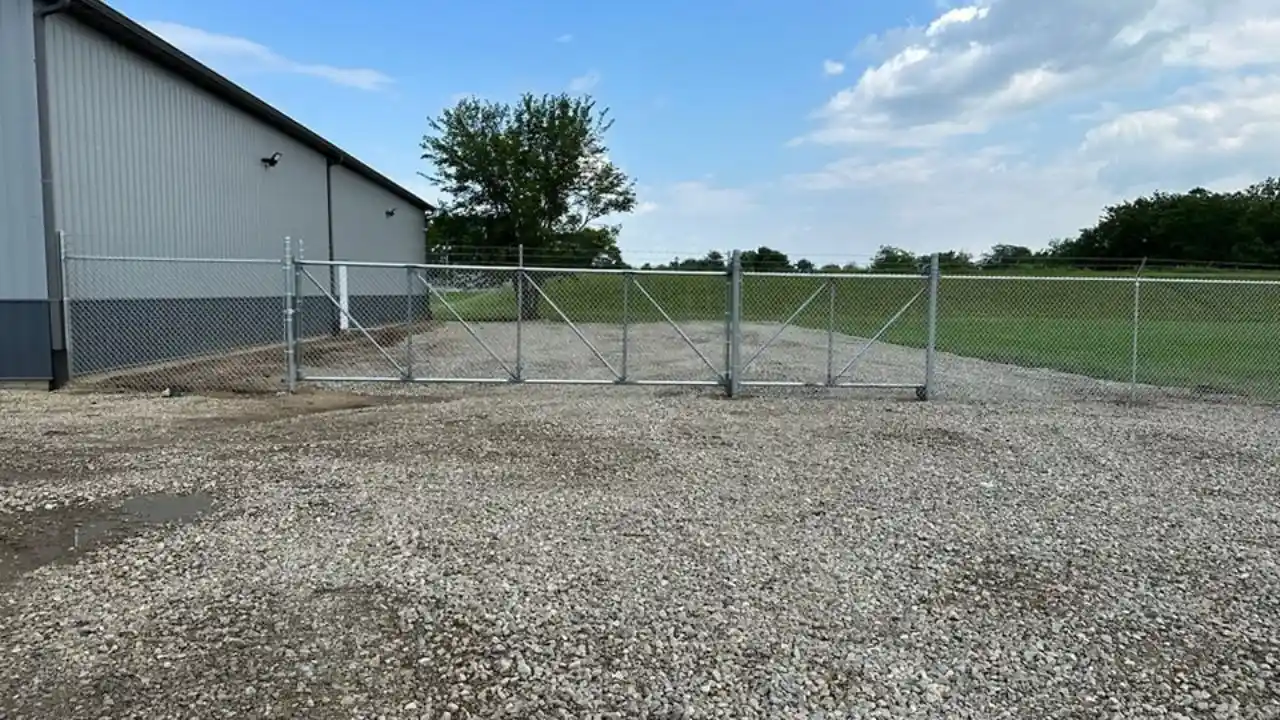
For commercial property owners across Ohio, fence permits are almost always required, regardless of the proposed fence height. Commercial fencing faces a deeper level of structural scrutiny for several reasons:
- Zoning Compliance: Commercial zones maintain specific requirements regarding visual buffers, industrial security fencing, and access control.
- ADA Compliance: Fences or access gates placed near commercial entrances or designated accessible pathways must not create pathways or obstructions that violate the Americans with Disabilities Act.
- Site Plan Approval: In most Ohio cities, any exterior modification to a commercial property requires a formal site plan review before a shovel touches the dirt.
- Security Material Restrictions: Cincinnati bans barbed wire, razor wire, and electric options in all zones except heavy industrial areas. Columbus and Franklin County restrict their installation exclusively to verified agricultural or industrial parcels.
What Commercial Owners Must Submit:
When applying for a commercial fence permit in Ohio, prepare to provide:
- A certified site plan or up-to-date property survey highlighting the proposed fence run.
- Exact fence material documentation, height profiles, and architectural design specs.
- Gate placement, swinging path dimensions, and emergency access compliance codes.
- Detailed security lighting plans, if applicable.
Commercial review timelines range from a few days to several weeks. Working with a licensed fencing contractor like Scheiderer Fencing simplifies this process significantly, as experienced commercial crews handle municipal submissions directly.
Ohio Fence Rules: Agricultural Properties

Agricultural fencing in Ohio follows a completely different legal framework, and in most rural instances, you may not need a municipal permit at all.
Ohio’s Agricultural Line Fence Law: ORC Chapter 971
Ohio has distinct statutory laws governing agricultural fencing, particularly for parcels utilized for farming, livestock production, or timber. These regulations, explicitly outlined in Ohio Revised Code Chapter 971, establish the rights and legal duties of agricultural landowners regarding shared boundary fence construction and maintenance.
- Line Fences: Shared boundary fences between matching agricultural landowners are governed exclusively by this chapter.
- Equal Responsibility: Both neighboring agricultural landowners share equal financial and physical responsibility for maintaining line fences unless a written, recorded agreement states otherwise.
- Township Trustee Intervention: Local township trustees hold the legal authority to inspect agricultural line fences and formally assign maintenance or cost responsibilities in the event of a neighbor dispute.
Important Clarification on the Line Fence Law
Ohio’s Line Fence Law applies strictly to rural and agricultural properties located within unincorporated areas. It does not apply to urban or suburban properties that have been laid out into residential lots under Ohio subdivision laws. For the majority of residential single-family homes, local city ordinances govern fence responsibilities, not the state’s agricultural Line Fence Law.
Do Farmers Need a Permit to Build a Fence in Ohio?
In most rural Ohio townships, agricultural fencing built for livestock containment, crop protection, or perimeter marking is completely exempt from building permits. However, exceptions apply:
- Incorporated Limits: If agricultural land sits within or directly borders incorporated city limits, local municipal zoning rules may still apply.
- Right-of-Way Obstructions: Fences constructed along state routes or county roads frequently require formal approval from the Ohio Department of Transportation (ODOT) or the county engineer to protect public right-of-ways.
For properties housing livestock, ORC 971.01 defines a lawful fence as a structure constructed of materials and dimensions sufficient to safely contain livestock. If an animal breaches an inadequate or poorly maintained fence and causes a vehicle accident or property damage, the owner can be held liable under Ohio’s livestock negligence laws.
City-by-City Snapshot: Central Ohio Fence Permit Rules
Fence regulations in Ohio are highly localized. What is perfectly legal in one township could result in an immediate code violation just a few blocks over. Below is a breakdown of the specific fence permit and zoning rules across key Central Ohio municipalities:
-
Columbus: Fences 6 feet and under do not require a structural building permit. However, anything exceeding 6 feet triggers a $300 building permit fee. Homeowners must also strictly adhere to visibility triangle restrictions on corner lots.
-
Dayton: Regardless of the fence height or the state’s structural exemptions, Dayton mandates a Zoning Permit for all residential fence installations before any construction begins.
-
Delaware: According to the City of Delaware Planning and Development department, homeowners must secure a combined Certificate of Building and Zoning Compliance (which carries a nominal fee of approximately $30). Delaware allows backyard privacy fences up to 7 feet tall, but front yard fences are restricted to a maximum of 4 feet and must be of an open, ornamental design.
-
Dublin: Dublin features some of the strictest zoning codes in Central Ohio. Before installation, you must apply for a Certificate of Zoning Plan Approval (CZPA) via the City of Dublin Portal. Perimeter privacy or solid fencing is prohibited; solid fences are capped at 4 feet and restricted strictly to screening patios or decks. Additionally, vinyl and PVC fencing materials are completely banned in residential zones.
- Marysville: The City of Marysville Zoning Department requires a Zoning Permit for every fence installation. The maximum allowable height is 6 feet, and the finished side out rule applies. For corner lots, a strict 30-foot visibility triangle is enforced at street intersections, where fence heights cannot exceed 2.5 feet.
Our Team’s Central Ohio Experience:
When working in highly regulated areas like Dublin and Marysville, we frequently encounter homeowners who pre-ordered vinyl or chain-link fencing without pulling permits, only to face code enforcement violations later. Whenever the Scheiderer Fencing team takes on a project in Delaware or Dublin, our first step is to cross-verify local HOA covenants and municipal zoning maps to protect your investment from day one.
How to Get a Fence Permit in Ohio: Step-by-Step
If your local municipality requires a permit, follow this step-by-step process to ensure a smooth, legal installation:
- Contact Local Departments: Call both your municipal building and zoning offices to confirm exactly which permits are required for your property layout.
- Secure a Property Survey: Obtain a certified property survey map. Do not guess where your property boundaries sit; building on a neighbor’s land can lead to immediate legal action.
- Finalize Design Specifications: Select your exact fence material, style, and height dimensions. Municipal applications require structural details.
- Secure HOA Approval: If your property sits inside an HOA, submit your architectural request form first. This approval process typically takes 2 to 4 weeks.
- Submit the Permit Application: Fill out the city application and attach your property site plan, showing the precise proposed path of the fence run.
- Pay the Processing Fees: Submit the local processing fee, which ranges from $25 to upwards of $300, depending on your city’s fee schedule.
- Wait for Formal Approval: Review timelines typically take anywhere from 3 business days to 3 weeks. Keep your approved permit documents on-site.
- Complete the Post-Installation Inspection: If your city requires a final sign-off, schedule a municipal inspector to come out and review the finished fence line.
Neighbor Cost Sharing: What Ohio Law Actually Says
This reality catches many suburban homeowners off guard. Ohio does not have a residential state statute requiring next-door neighbors to split or share the cost of a boundary fence. Unlike the distinct agricultural cost-sharing provisions found in rural areas under ORC Chapter 971, residential fence costs fall entirely on the property owner who wants the fence built.
If you want to install a privacy fence along a shared residential property line, you will be financially responsible for the entire project unless you negotiate and execute a separate private, written contract with your neighbor beforehand.
FAQs: Ohio Fence Permits Answered
Can I build a fence in Ohio without a permit?
In certain rural townships and for standard low-height residential fences, yes, but you must verify this directly with your local zoning office first. Installing any fence without a required municipal permit can result in immediate civil fines or court-ordered, forced removal at your own expense.
What’s the difference between a building permit and a zoning permit for an Ohio fence?
A building permit strictly reviews structural safety and engineering integrity (generally triggered for installations over 6 feet tall). A zoning permit cross-checks property setbacks, height restrictions, and material limitations against local neighborhood district codes. Many Ohio cities require a zoning permit for every single fence installation, regardless of height.
Does my residential neighbor have to pay for half of my new fence?
No. Ohio law features no state mandate forcing residential neighbors to contribute financially to a boundary fence. Cost-sharing laws apply strictly to verified agricultural operations within unincorporated rural areas under the state’s Line Fence Law.
Are barbed wire or electric fences allowed in residential subdivisions?
No. Barbed wire, razor wire, and high-voltage electric fencing are strictly prohibited in residential zones across virtually every city and suburb in Ohio. These security materials are legally restricted to designated agricultural or heavy industrial properties.
Final Thoughts: Don’t Skip the Permit Process
Securing a proper fence permit in Ohio isn’t just about managing local red tape; it legally insulates your property investment, verifies code compliance, and protects your home’s equity from future real estate disputes.
Because zoning codes change frequently and vary heavily between city lines and rural townships, navigating this process requires local knowledge. If you’re planning a fencing project across Delaware, Dublin, Marysville, or the surrounding Central Ohio areas, contact the professional installation team at Scheiderer Fencing to ensure your residential, commercial, or agricultural project is built beautifully and fully compliant from day one.
About the Author
Caleb Scheiderer is a Senior Project Consultant at Scheiderer Fencing with more than 5 years of hands-on experience in residential, commercial, and agricultural fence design across Central Ohio. He has guided hundreds of property owners through local zoning disputes, municipal setback requirements, and fence permit applications in Columbus, Delaware, and Marysville. His work focuses on designing durable, fully code-compliant fencing solutions tailored to the unique regulatory requirements of Ohio communities.