
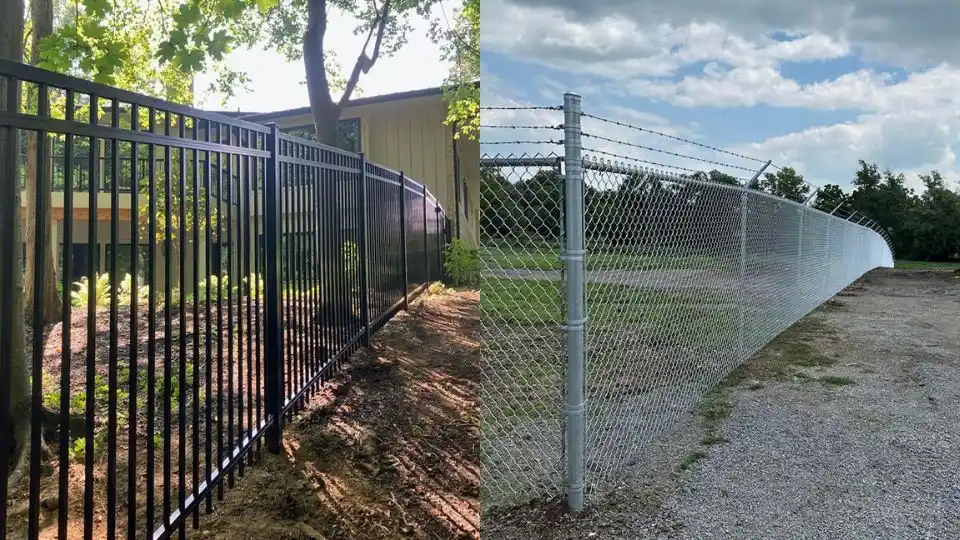
Choosing the right fence for your property isn’t just about picking something that looks good; it’s a real decision that affects your security, your wallet, and your weekend plans for years to come. If you’ve been going back and forth between a chain-link fence vs a wood fence, you’re not alone. These are the two most popular fencing options for residential and commercial properties, and both have genuine strengths depending on what you actually need.
I’ve spent time breaking down both options side by side from upfront installation costs to long-term durability, so you can make the most informed choice for your home or business.
What Is the Main Difference Between Chain Link and Wood Fencing?
At their core, these two fence types solve different problems. Chain-link is built for security, containment, and low maintenance. Wood is built for privacy, curb appeal, and neighbourhood aesthetics.
A chain link fence uses woven galvanized steel or vinyl-coated wire mesh stretched across metal posts. A wood fence uses timber planks or pickets, commonly cedar, pine, or redwood, fixed to wooden or metal posts.
Neither is universally “better”. But one is probably right for your situation, and that’s what we’re going to figure out.
Chain Link vs Wood Fence: Security Comparison
This is where things get interesting, because both fence types offer security, just in different ways.
Chain link fences are remarkably hard to breach. The woven steel mesh resists cutting without heavy-duty tools, and because the structure is open, there’s nowhere for an intruder to hide. Surveillance cameras and motion-sensor lighting work better with chain link because sightlines are unobstructed. For commercial properties, industrial yards, schools, and sports facilities, chain link with barbed wire extensions or angled tops is the go-to perimeter security solution.
Wood fences, on the other hand, create a solid visual barrier, which is security in a different sense. If someone can’t see your expensive patio furniture, your kids playing in the backyard, or your parked car, they’re less likely to target your property. A tall, solid wood privacy fence deters opportunistic theft simply by blocking visibility. However, wood fences have a weakness: a rotting or damaged board becomes a structural vulnerability. A chain link fence weakens evenly and visibly; a wood fence can fail at one weak point without warning.
Winner for perimeter security: Chain link
Winner for visual deterrence and privacy: Wood
How Much Does a Chain Link Fence Cost vs a Wood Fence?
Cost is usually the first question people ask, and the numbers are pretty clear:
| Factor | Chain Link Fence | Wood Fence |
|---|---|---|
| Material cost (per linear foot) | $5–$15 | $10–$20 |
| Installed cost (per linear foot) | $10–$30 | $20–$50 |
| 200-foot fence (installed) | $2,000–$6,000 | $4,000–$10,000 |
| Annual maintenance cost | Near $0 | $200–$500 |
Chain link fencing is typically 40–60% cheaper to install than wood fencing for the same length and height. If you’re fencing a large property or working with a tight budget, that difference is significant.
But don’t forget long-term costs. Wood fences require staining, sealing, and periodic board replacement, costs that add up over a 15-year lifespan. Chain link fences, by contrast, need almost zero annual maintenance. Occasionally spray it down. Replace a damaged section if something hits it hard. That’s about it.
When you calculate cost of ownership per year, chain link often wins decisively, especially on larger lots.
Chain Link vs Wood Fence Lifespan: Which Lasts Longer?
This one isn’t close. Chain link fences consistently outlast wood fences.
- Chain link lifespan: 20–30 years (galvanized steel); vinyl-coated versions can exceed 30 years
- Wood fence lifespan: 15–20 years with diligent maintenance; as few as 10 years without it
Wood is naturally vulnerable to moisture, rot, UV damage, warping, and termite infestation. Even premium wood types like cedar and redwood require regular sealing to reach their maximum lifespan. Neglect the maintenance for a few years, and a wood fence’s life expectancy can drop by 30–50%.
Chain link doesn’t rot. It doesn’t warp. Pests don’t eat it. In most climates, a properly installed chain link fence simply outlasts its wood counterpart with far less effort from the homeowner.
Privacy: Does Chain Link Have Any?
Standard chain link offers essentially zero privacy, it’s see-through by design. However, homeowners who want the durability of chain link and more privacy have real options:
- Vinyl privacy slats woven through the mesh can block 75–90% of visibility
- Privacy screening fabric attaches along the fence and blocks line of sight entirely
- Climbing plants or vines (like ivy or jasmine) grow into the mesh and create a natural, green privacy barrier over time
Wood wins outright for privacy if you use solid panel, board-on-board, or shadowbox designs. Tall solid wood fencing also helps reduce noise from streets or neighbours, a genuine quality-of-life benefit chain link can’t replicate.
Which Fence Is Easier to Maintain?
Chain link wins without debate. Here’s what each fence type actually demands:
Chain Link Maintenance:
- Rinse with water occasionally to remove dirt and debris
- Treat small rust spots on galvanized steel (a $10–$20 fix)
- Retighten tension bands if sagging occurs (rare, and takes 20 minutes)
Wood Fence Maintenance:
- Stain or seal every 2–4 years ($100–$500 DIY; up to $1,500 professionally)
- Power wash annually to prevent mold and mildew buildup
- Replace warped, cracked, or rotted boards as they occur
- Inspect posts for ground-level rot every year
If you’re a busy homeowner who doesn’t want to spend weekends maintaining your fence, chain link is genuinely the lower-stress choice.
Does a Wood Fence Add More Home Value Than Chain Link?
Generally, yes, but with important caveats.
A well-maintained cedar privacy fence can improve a home’s curb appeal and is often viewed favourably by buyers, particularly in suburban neighbourhoods where privacy is expected. Real estate professionals frequently suggest replacing chain link with wood or vinyl before listing a property, noting that the visual improvement often justifies the cost.
That said, Chainlink isn’t useless from a value perspective. For buyers with dogs, children, or specific security needs, a well-installed chain-link fence is a functional asset, especially in rural or semi-rural areas where aesthetics matter less.
One critical thing to check before installing either type: HOA rules and local zoning regulations. Many homeowners’ associations prohibit chain link in front yards or even backyards. Violating these rules can result in costly removal and reinstallation.
Can You Attach Chain Link Fencing to Wood Posts?
Yes, and this is a popular hybrid approach. Using wood posts with chain link mesh combines the natural look and stability of timber with the low-maintenance durability of chain link. Specialized hardware like tension bands, rail end caps, and U-bolts secure the mesh to the wood posts cleanly. It’s a practical middle ground for homeowners who like the warmth of wood but don’t want the upkeep of full wooden fencing.
Chain Link vs Wood Fence: Which Should You Choose?
Here’s the honest summary:
Choose chain link if:
- You’re working with a tight budget or fencing a large area
- Longevity and low maintenance are your top priorities
- Security visibility matters (cameras, open sightlines)
- You’re fencing a commercial, industrial, or utility space
Choose wood if:
- Privacy is essential for your backyard or property
- You want to boost curb appeal and potentially home resale value
- Your neighborhood or HOA prefers or requires wood fencing
- You want noise reduction and a more enclosed outdoor living space
Both fences are excellent when installed correctly and used in the right context. The “best” fence is the one that fits your actual priorities, not just the one that sounds impressive on paper.
FAQs
Is a chain-link fence cheaper than a wood fence?
Yes, chain link fencing is generally much cheaper than wood fencing. Installation costs are often 40% to 60% lower, and maintenance expenses are minimal over the fence’s lifespan.
Which fence lasts longer, chain link or wood?
Chain link fences typically last 20 to 30 years or more, while wood fences usually last 15 to 20 years with proper maintenance. Without regular upkeep, wood fences may have a much shorter lifespan.
Is a chain link fence more secure than a wood fence?
Chain link fences are often considered more secure because they are difficult to cut without specialized tools and provide clear visibility around the property. However, wood fences offer better privacy, which can also help deter unwanted attention.
Does a wood fence add value to a home?
Yes, a well-maintained wood fence can increase kerb appeal and may improve a home’s resale value, especially in neighbourhoods where privacy fencing is desirable.
Can you make a chain-link fence private?
Yes, privacy can be added to a chain link fence using privacy slats, screening fabric, or climbing plants. These solutions can significantly reduce visibility while maintaining the durability of the fence.